Hey Folks,
It’s that time of year once again. Thanks so much for stopping by to read the blog here and view the photos, I appreciate it.
Here are my pick of images (34) for 2011. I hope you enjoy them.
Thanks
Cheers
Carl
Continue readingHey Folks,
It’s that time of year once again. Thanks so much for stopping by to read the blog here and view the photos, I appreciate it.
Here are my pick of images (34) for 2011. I hope you enjoy them.
Thanks
Cheers
Carl
Continue reading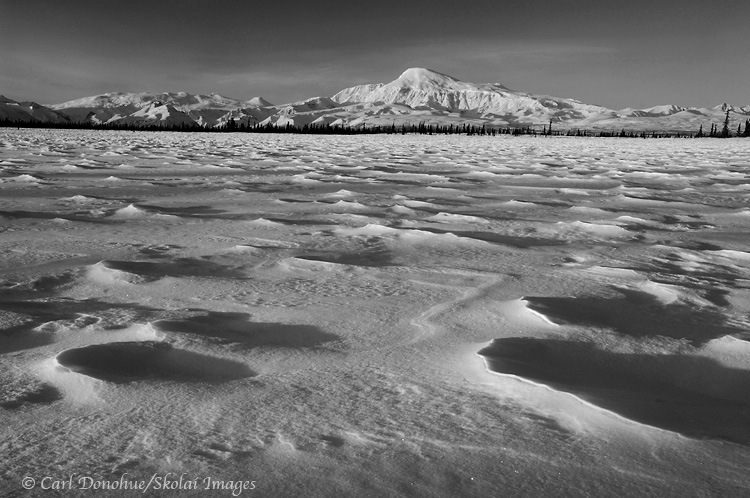
Hey Folks,
Here’s an image of Mount Sanford, Wrangell-St. Elias National Park and Preserve, I took a while ago, that I converted to black and white in photoshop. I shot this after the alpenglow had faded, and the sun rose high enough in the sky to light up not just Mount Sanford’s massive peak, but the entire floor of the Copper River Basin.
It’s very easy to be tempted to pack up and head off after the alpenglow on a mountain wanes; I often find the light immediately following the alpenglow to be unappealing to me. The sky has a weird yellowish tint to it, and the contrast between the dark, shaded foreground and the brightly lit peak is too great to really photograph well; for me, anyway.
Continue reading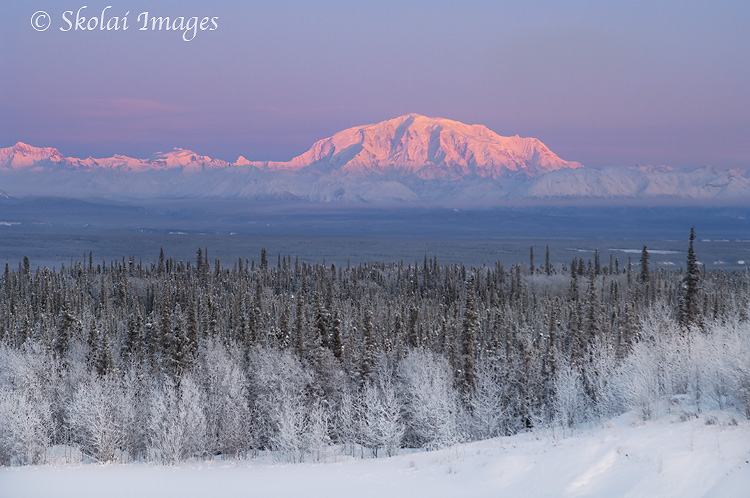
Hey Folks,
Here’s a view of Mount Blackburn and the Wrangell Mountains, at sunset.
One of the hassles with shooting in Alaska in the dead of winter is, of course, the cold. We all understand how that’s a hassle, right? Cold fingers, batteries that die, and so forth. The list goes on. Cold Weather Photography is challenging.
So too is driving a vehicle in winter in Alaska.
Getting a vehicle started at 40 below zero deg F is itself an art. An engine block heater for your car helps – well, it’s pretty much a ‘must have’. But at minus40deg, even that won’t get you far.
The engine block heater helps warm up the mechanical parts of the engine block, but at these frigid arctic temperatures, even the oil thickens up so much it doesn’t flow; problematic for a car engine. So, an Oil Heater works well.
Another useful tool is something to warm up the battery. The 3rd item that’s a good tool to have is a battery heating pad – cold temperatures can dramatically affect the cranking power of a battery, so heating it up will help get your car started.
Continue reading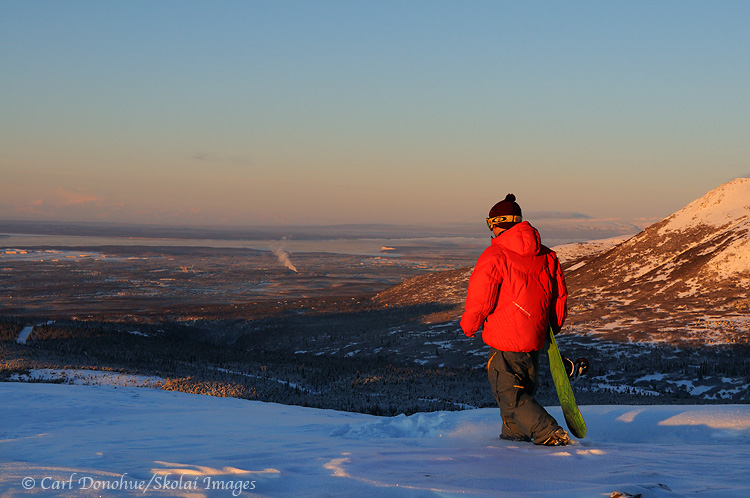
Hey folks,
A quick word of advice. If you think it looks like a nice afternoon to go out and shoot some photos (i.e., the light is rockin’, fresh snow on the mountaintops, etc, etc, etc), the very best of advice I might offer you is this: Head out on your own.
I know better than to think I might do some photography when I head out with non-photographers. Well, I like to THINK I know better, but I today did it yet again. Sometimes I’m a just a flatout non-learner, I guess.
So, as the setting sun turned the sky and nearby mountains a glorious pink, instead of photographing the grandeur, I was packed up and skiing my way back to the parking lot, my camera and tripod safely tucked away inside my daypack.
Photography and non-photographers just don’t mix well. The first time I was given this lesson was years ago, in a discussion with the late Bill Silliker, Jr (a great photographer and a good man); we were talking about being a photographer versus being a musician. Bill had been a drummer in his younger days. His words were “Carl, one of the best things, for me, about photography as a gig is that I don’t need a bass player”.
Continue reading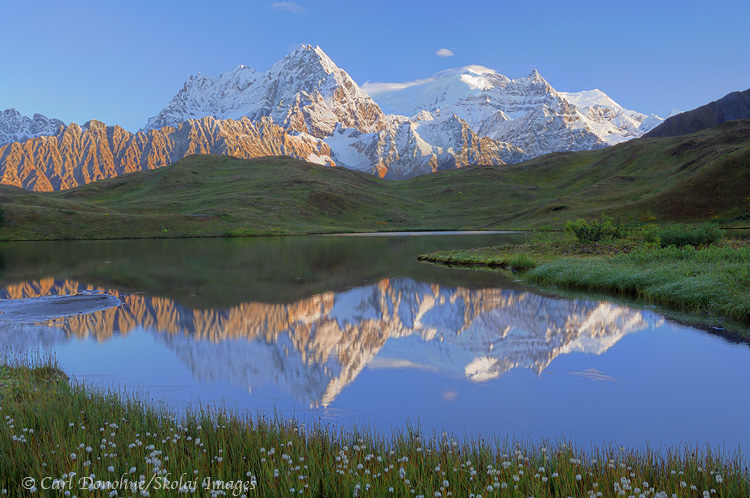
Hey Folks
Here’s another image, taken earlier, of the scene outside my tent door a few mornings ago. After spending the previous day in the rain, cold, sleet and snow, I went to bed hoping for an improvement in the weather.
All during dinner, I had watched the snowline on the peaks above camp come ever slowly down the mountains – lower and lower. Now, listening to the rain fall on my tent, I didn’t imagine much change happening.
Turning off my headlamp, it was lights out, and I had barely a flicker of hope for the rest of the hike – the continuing patter of rain falling on my tent a sound I was about done with. Eventually that sound faded and then ceased altogether – at first I thought it had simply turned to snow, but a glance outside confirmed that nope, the rain had actually stopped. Woo hoo!
Continue reading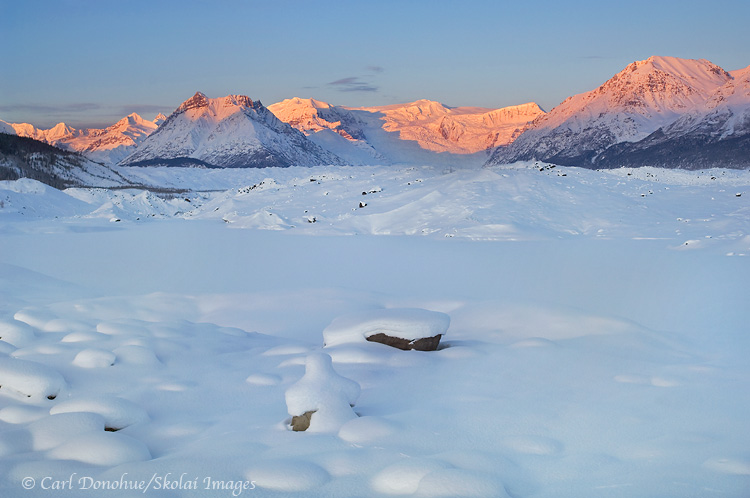
Hey Folks,
The Wrangell Mountains in winter. Alpenglow catches the eastern edge of the range. This view is looking up the Kennicott Glacier. At right is the edge of Bonanza Ridge, Jumbo, Then Stairway Icefall, Donohue Peak just left of center, and the Ahtna Peaks behind that to the left.
Winter’s finally wrapping itself up here in the north; it lingers much as the sun’s final rays cling to these high peaks at days end. Spring makes it’s way north slowly, and and is completely diurnal for now. The days, growing longer weekly, yield. But the night belongs to the winter, the cold, dark silence of the quiet time.
This is the first real “view” I ever had in Wrangell-St. Elias National Park and Preserve, all those years ago when I first ventured north on a backpacking adventure. I’d taken a bus from Fairbanks south, and the weather wasn’t so great; not raining, but overcast. I didn’t really have any idea of the scale of the landscape I was amongst at the time. The bus dropped me off on the highway, at the Edgerton Cutoff, and I hitch-hiked from there in to McCarthy (about 90 miles). That was an adventure in itself, maybe I’ll recount it another time.
Continue reading
Hey Folks,
Here’s a photo I took last spring of a male Pine Grosbeak in Wrangell-St. Elias National Park. I had set up a couple of feeders around the Shack and these gorgeous birds would come in every day and have a good ole time.
Other regular visitors to the buffet were Black-capped and Boreal Chickadees, Common Redpolls, Hairy and Downy Woodpeckers, Gray Jays and, of course, the effervescent Red Squirrel. Ravens came by, from time to time, but rarely dropped down to the feeder.
The Pine Grosbeaks were my favorite though.
The grosbeaks are actually a finch, the largest of the boreal finches. A group of these birds together is called, wait for it, a ‘gross’ of grosbeaks. They’re such a cool bird, and very tolerant of my puttering around the cabin; they’d generally ignore my comings and goings.
I grabbed a small white spruce sapling that some snow-machiners had run over and destroyed, and used it to set up the perch. For a background I hung a fleece blanket up and positioned it for a nice clean background. It’s a little bit ‘contrived’, but hopefully it works OK.
Continue reading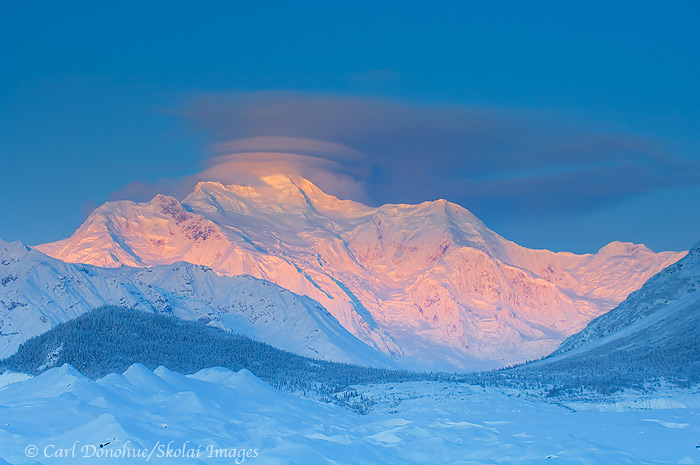
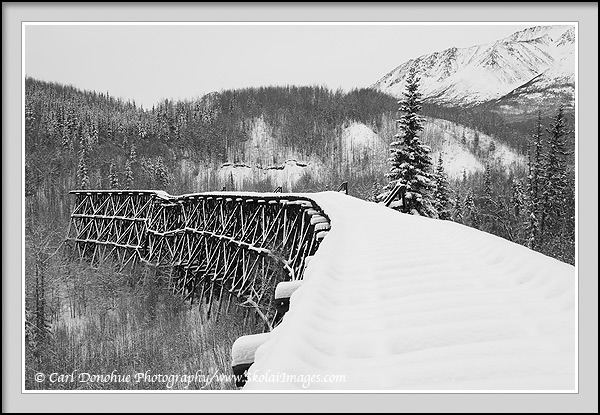
Alaska’s Ultimate Bridge to Nowhere – The Gilahina Trestle fades into winter, Wrangell-St. Elias National Park and Preserve, Alaska. Click for larger version.
Hey Folks,
The Gilahina Trestle, crossing the Gilahina River, was once an impressive structure. Built in 1911 as part of the Copper River and Northwestern Railway (nicknamed “Can’t Run and Never Will”), the Gilahina Trestle was not quite 900′ long, and nearly 100′ high. Rumors say that it took less than 8 days to build, and the first train ran across its length on January 28, 1911. It’s since fallen into some disrepair, as is evident from this image. It’s a rickety ole job, at this point, and walking across it with nearly a foot of snow covering each board was, uhhm, sketchy. But I made it out for a few photos and back in one piece.
The Gilahina Trestle is now listed on the National Historic Register, which means it’ll probably come in for some funding to repair/restore it.
Continue reading