Tag Archives: Photography Technique

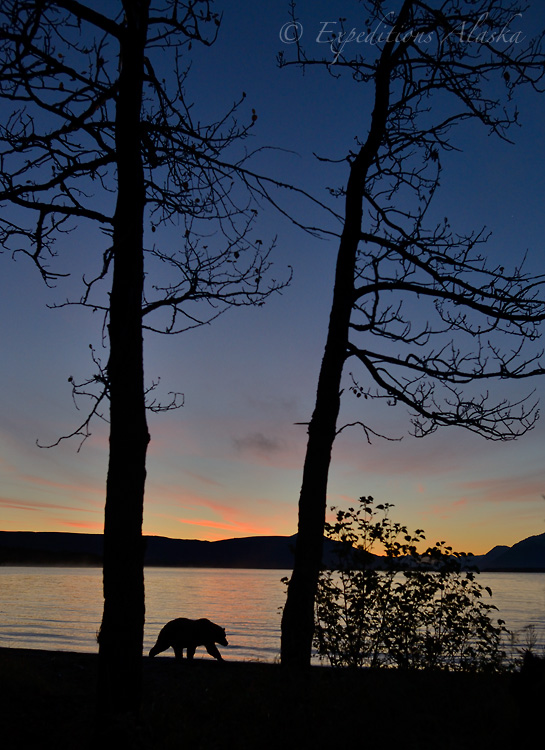
Brown bear silhouette

Silhouetted brown bear at sunrise, Katmai National Park, Alaska.

Timing is everything; especially for photography. Being in the “right place” at the “right time” is critical to making the “right photos”. Especially when photographing brown bears. So how, exactly, do we go about making that happen?

A million dollar question, I think.

One comment that we read and hear frequently, and I completely agree with, deals with knowing your subject. Knowing the behavior of an animal, for example, can help us predict where it might move to, what it may do, and so on. There’s no question, in my opinion anyway, that the better you know your subject, the better the photo opportunities you’ll have.

Continue reading
RAW files and stock photo sales

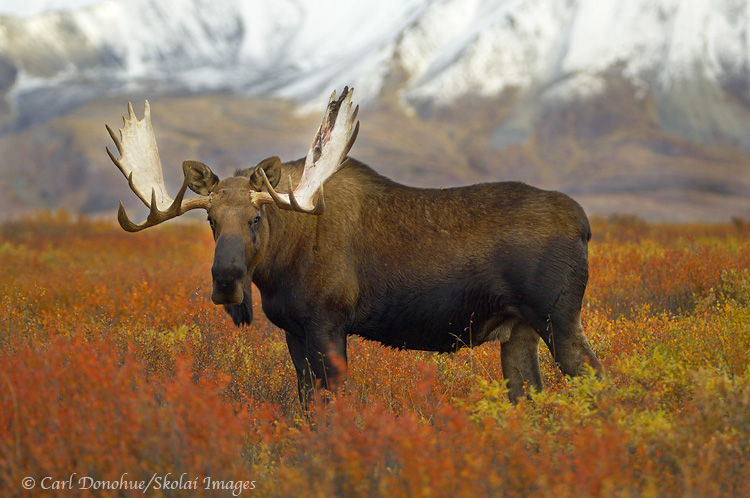
Bull Moose in fall color, Denali National Park, Alaska.
A bull moose standing on the fall tundra in Denali National Park and Preserve, Alaska. Vegetation includes Dwarf Birch and Alaska Willow. Please click on the image to view a larger version of the photo.

Hey Folks

Recently I saw a tweet the other day from photographer Richard Bernabe: “Just had a photo editor demand raw files to process as they see fit. I turned the deal down.”

I saw and enjoyed at least some of the following conversation. We discussed the merit of sending out a RAW file to a photo editor instead of some other file format, such as a tiff or a jpeg.

For myself, I can’t see any reason to not send a RAW file if an editor or graphic artist requests it, unless there was some very highly unusual and extenuating circumstance; the only one that springs to mind is if the final image was a manual blend of multiple exposures, and/or a panoramic stitch that I’d put together. Even in those circumstances, I suspect I’d most likely explain to the person I was dealing with about the amount of time involved in finishing the product from camera to computer screen, and suggest they simply use the finished 8-bit tif or jpeg file, but if they felt they really wanted the RAW files, I can’t see why not; it’d mean they have to do (in some cases) a whole lot of work I’d already done, but if that’s what they wanted, I can’t see a good reason to refuse.

Continue reading

Cold Weather Photography at 40 Below Zero

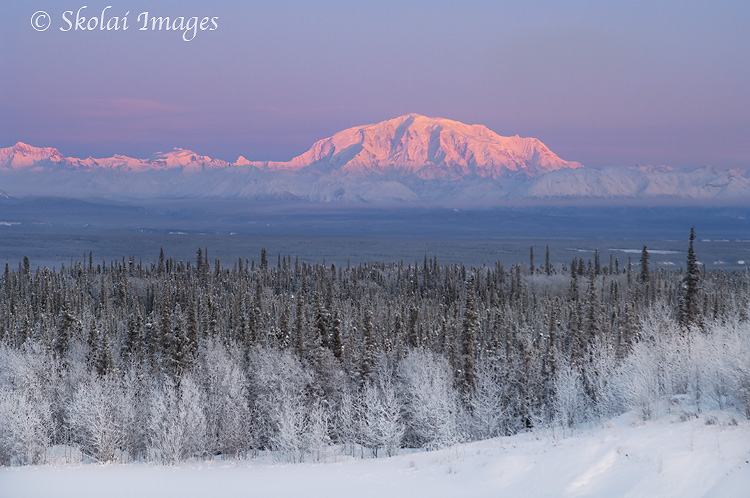
Mount Blackburn Photo, Wrangell-St. Elias National Park, Alaska.
Mount Blackburn Photo, Wrangell Mountains and the Copper River Basin, Wrangell-St. Elias National Park, Alaska.

Hey Folks,

Here’s a view of Mount Blackburn and the Wrangell Mountains, at sunset.

One of the hassles with shooting in Alaska in the dead of winter is, of course, the cold. We all understand how that’s a hassle, right? Cold fingers, batteries that die, and so forth. The list goes on. Cold Weather Photography is challenging.

So too is driving a vehicle in winter in Alaska.

Getting Your Vehicle Started at -40°F

Getting a vehicle started at 40 below zero deg F is itself an art. An engine block heater for your car helps – well, it’s pretty much a ‘must have’. But at minus40deg, even that won’t get you far.

The engine block heater helps warm up the mechanical parts of the engine block, but at these frigid arctic temperatures, even the oil thickens up so much it doesn’t flow; problematic for a car engine. So, an Oil Heater works well.

Another useful tool is something to warm up the battery.  The 3rd item that’s a good tool to have is a battery heating pad – cold temperatures can dramatically affect the cranking power of a battery, so heating it up will help get your car started.

Continue reading

Do you practice?

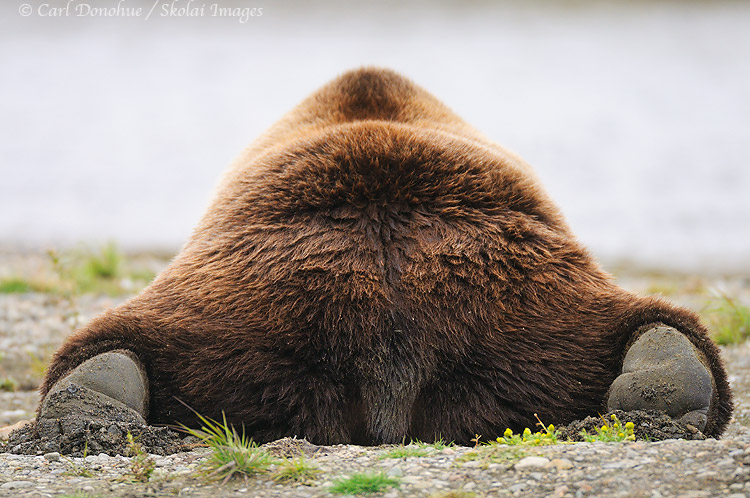
Grizzly bear, from behind.
A grizzly bear, rear view, Katmai National Park and Preserve, Alaska. Please click on the image above to view a larger version of the photo.

Hey Folks,

As often as I’ve run across discussions about art and photography, I’ve never really heard anyone ask this question. Most artists, painters, writers, musicians, sculptors, dancers, etc, practice, routinely. But how much practice do you, as a photographer, actually do?

I don’t mean “time in the field shooting”. I mean time in the wood shed, practicing, honing your chops? I mean sitting working on a particular technique, idea, composition, theoretical study, etc.

Continue reading

Northern Lights photo

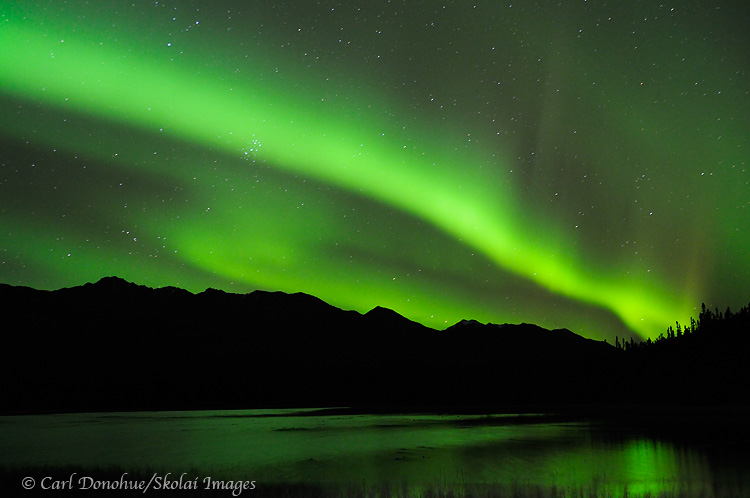
The aurora borealis (northern lights) light up the night sky and a reflection glows in Dead Dog Hill Lake in the Mentasta Mountains, boreal forest, Wrangell-St. Elias National Park and Preserve, Alaska.
The aurora borealis (northern lights) light up the night sky and a reflection glows in the lake in the Mentasta Mountains, boreal forest, Wrangell-St. Elias National Park and Preserve, Alaska.

Hey Folks,

Here’s another northern lights photo from Wrangell-St. Elias National Park. This one I tried my darndest to catch the reflection in the foreground, but the slight breeze thwarted my every effort.

I’m seriously considering buying the Nikon 24mm 1.4 lens, specifically for northern lights photos. The difference in shutter speed with that lens, versus using a 2.4mm lens, is enormous.

For example, this northern lights photo was taken at f.28 and a shutter speed of 25 seconds. That means after the exposure, is then need to let the camera effectively take another 25 second exposure for noise reduction .. meaning the total time elapsed is 50 seconds. That’s a lot of time to be not shooting. it also means, with that long exposure, the lights tend to wash out a little, and lose definition that comes with a faster shutter speed.

Conversely, if you happen to be suffering from Strep throat induced diarrhea, the longer exposure can work to your benefit; you’ll certainly not be in any rush for the camera to finish doing it’s business while you tend your own. Just say’n, cause trust me, it CAN happen! 🙂

On the other hand, a lens with max aperture of 1.4 is 2 whole stops faster ..

Continue reading

Grizzly Bear and Fall Colors

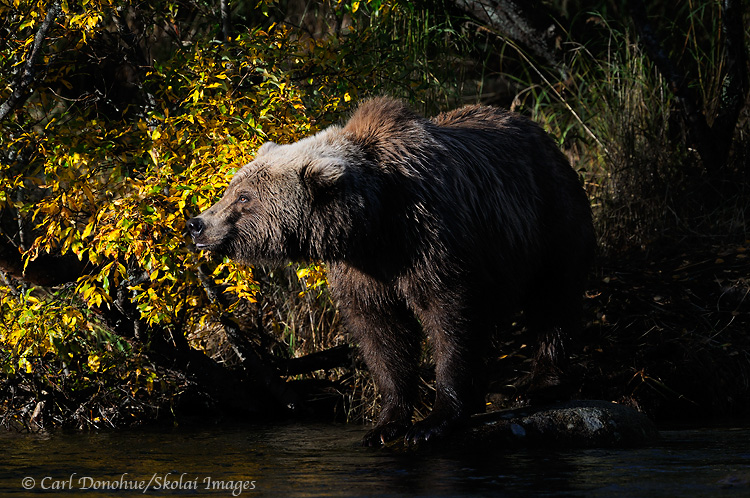
Grizzly bear and fall color, standing in warm afternoon light on the edge of a salmon stream. Ursus arctos, brown bear, Katmai National Park and Preserve, Alaska.

Hey Folks,

As I mentioned in a post a few days back, I am pretty excited about some of the grizzly bear photos I took on this most recent trip to Katmai National Park. Over the years I’ve spent so many weeks there, shooting and re-shooting photos of grizzly bears, that it can be difficult to really bring home some new images. This photo is one I was super happy with.

I took, of course, countless images of bears eating salmon, chasing salmon, catching salmon, standing around, sitting down, sleeping, fighting, playing, etc. But what I really wanted to capture was some dramatic images in dynamic weather or dynamic lighting situations.

Continue reading

Brown Bear Photos, Katmai National Park, Alaska

Grizzly bear walking in a salmon River, Katmai National Park, Alaska.
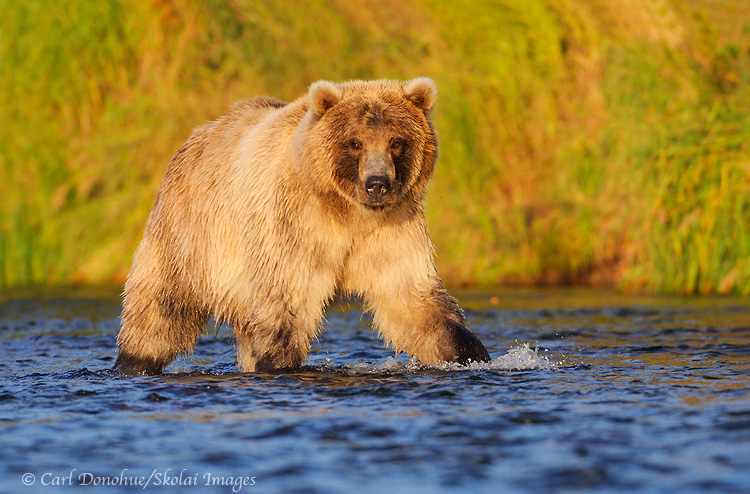
A young brown bear (Ursus arctos) walks through a stream hunting for spawning Sockeye Salmon. Grizzly bear, or coastal brown bear, Katmai National Park and Preserve, Alaska.

Hey folks

Won’t be long until the bears are running around the woods again!!!

I’ll be in the woods for the coming week, but I thought I’d post a brown bear photo, and schedule a couple of other blog posts for while I’m gone.

Catching this young blonde colored brown bear in some nice light was quite a treat. That’s the benefit of spending time in the field. Most wildlife photography, it seems, is done in places where the subject is pretty much a given; places like Homer for bald eagles, Yellowstone for elk, Churchill for polar bears, and Katmai National Park and Preserve for grizzly bears, or brown bears.

So what makes the difference?

Continue reading

Blurred Aspen boles

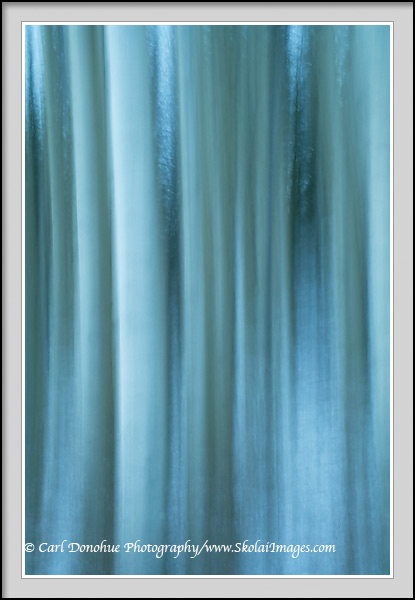
Camera panning blurs the boles of Quaking aspen (Populus tremuloides) in Wrangell-St. Elias National Park and Preserve, Alaska.

Camera panning blurs the boles of Quaking aspen (Populus tremuloides) in Wrangell-St. Elias National Park and Preserve, Alaska.

Hey Folks,

Here’s a follow up to the post below of this small aspen stand in Wrangell-St. Elias National Park and Preserve. Aspens aren’t doing so well in the warming climate we’re seeing in the world today. It’s more than a shame, they’re such a magnificent tree.  I remember the first time I ever camped beneath the canopy of a stand of aspen, not far off the Resurrection Pass Trail in Alaska’s Kenai Peninsula. A quick dinner of pasta and tuna, some cocoa and a Milky Way for dessert, and my sleeping bag called my name; just as I settled in to that beautiful state of semi-consciousness between wakefulness and sleep, those moments when all the world is your friend, a slight breeze rustled through the forest, the indescribable sound instantly hooking my complete attention.

Continue reading

Grizzly Bear Chasing Salmon

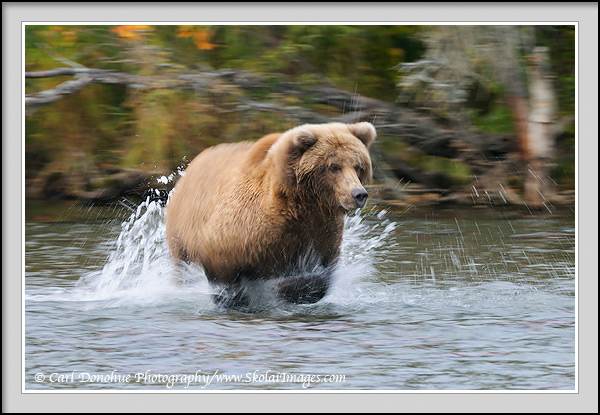
A slow shutter speed blurs the speed of a grizzly bear chasing a Sockeye Salmon in Brooks River, Katmai National Park, Alaska.

Hey Folks,

This Post is About Motion Blurs, Art and Technique

One of the photos I wanted this year was some slower shutter speed blurs of grizzly bears chasing spawning Sockeye Salmon (Oncorhynchus nerka) up the river.

This kind of image is difficult to do with grizzly bears; well, not difficult to do, but difficult to manage a photo that works.

More so, I think, than with most other animals.

The result of this is that it seems to take about 5 times as many attempts to get a decent ‘panblur’ of a grizzly bear than it might, for example, of a caribou or wolf.

What’s a Panblur Photo?

What I’m calling a ‘panblur’, for those of you who aren’t certain, is a technique of slowing down the shutter speed when shooting movement, so that the subject becomes blurred, rather than crisp and sharp.

You can see in the image above the spashing water and the legs of the bear are not to sharp at all. By panning the camera along with the bear as it races through the water,

Continue reading