Category Archives: Wildlife

Wildlife Photos. Notes and thoughts related to wildlife photography.

The Wolf Song

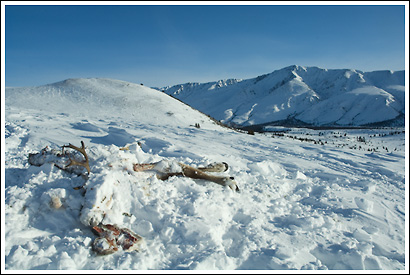
Wolf killed caribou carcass, winter, Wrangell St. Elias National Park, Alaska.

Hey Folks,

I was really, really hoping to get some wolf photos on this last trip to Wrangell-St. Elias National Park. Just one would’ve been fine.

Wolves aren’t as common in the southern reaches of the park, though they’re certainly around, so I was hoping to get lucky enough to maybe see, perchance to photograph, one on the north side of the park. The habitat on the south side isn’t (generally) as wolf friendly – more heavily forested, and lots of alpine mountain country, snow and ice.

Dall sheep and moose are the main prey for wolves in that part of the park, and though there are a lot of sheep, the numbers are smaller than the herds of caribou that wander through the north part of the park in the fall and late winter/early spring.

Continue reading

Young Bull Moose, Wrangell-St. Elias

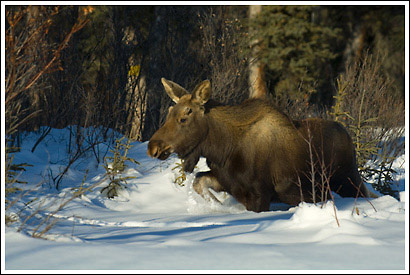
A young bull moose wades through deep powdery snow, winter, boreal forest, Wrangell-St. Elias National Park, Alaska.

Hey Folks,

Here’s a young bull moose, a yearling, trundling through the snow. Moose have disproportionately longer legs than other members of the deer family, and it really helps them get through deep snow.

This is a helpful advantage as they seek out food in the winter, and also in evading their main predator, the wolf pack.

But the real secret they employ is a kind of double-jointed hip or knee that allows them to lift their legs higher than most ungulates, and high-step their way to safety.  When I first saw this fellow, he stepped into a deeper drift that was right up to his belly, yet he managed to clamber his way through, regather, and then set about finding himself some browse for dinner.

The word ‘moose’ comes from a North American Indian Tribe, the Abenaki, and it translates roughly as ‘he trims or cuts off’, a reference to how the Moose browses twigs and bark from trees.

Cheers

Carl

Snowshoe hare and lynx population cycles

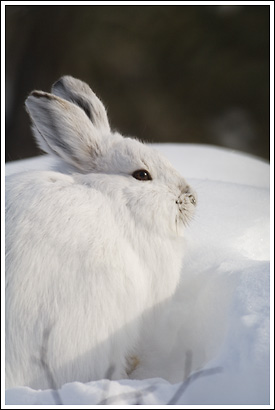
Snowshoe hare, winter molt, white fur, Wrangell-St. Elias National Park, Alaska.

Hey Folks,

Here’s a REAL snowshoe hare photo, taken on my recent sojourn to the northern side of Wrangell-St. Elias National Park. I was very surprised at how little sign of snowshoe hares there was in this area – negligible. Everywhere else, it seems, the woods are crawling with them. This is at, or close to, the peak of the cycle for snowshoe hares; a 10 year population fluctuation that seems to be pretty consistent.

Why is the Snowshoe Hare Population so volatile?

Sometimes the cycle might be 9 years, or 11, but it’s not usually far off. The population rises steadily, then faster, peaks, and falls drastically,  almost completely, in a single year. Ecologists aren’t sure as to what causes the drop in numbers, though theories abound, as always.

Continue reading

Caribou feeding in winter snow

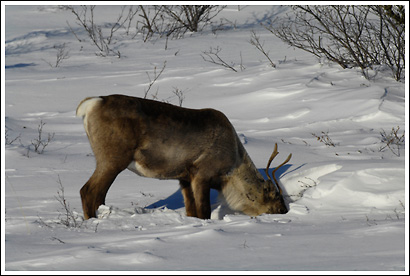
A caribou cow digging under snow for food, feeding on lichens and grasses, in winter, Wrangell-St. Elias National Park, Alaska.
Winter caribou feeding in Wrangell-St. Elias National Park

Hey Folks,

Normally I wouldn’t post a photo of an animal with its head buried under the snow. But, for caribou, this is winter life. Caribou feed on lichens and grasses, and those lie buried, often deep beneath snow’s crust for the long winter months.

Caribou have a few options to eke out their winter, and a heavy snow pack in the winter can be a tough gig for them; finding food is a mission and avoiding predators, namely, the wolf, an equally difficult, if not critical, task. So they’ll typically seek high ground,

Continue reading

Bald eagle, Alaska

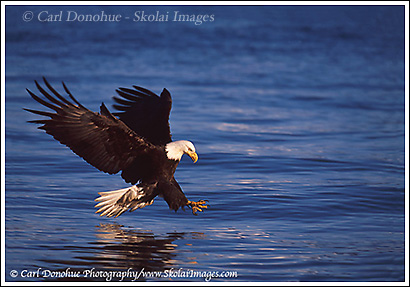
Bald eagle, catching a fish, Kachemak Bay, Homer, Alaska.

Hey Folks,

Just as a head’s up – unfortunately, my posting here is about to slow down considerably. I, apparently, have a great deal of work to catch up on. And I was hoping, if things worked out well, I’d have some good internet time in the next few months .. but that appears to be unlikely now. I’ll try to keep posting here as possible, it’ll be a little slower for a while, I think. Bummer, eh?

In moving along with my ‘showing some older, pre-blog-photo-era images, I thought I’d post a bald eagle image. This is from the winter of 2002. Continue reading

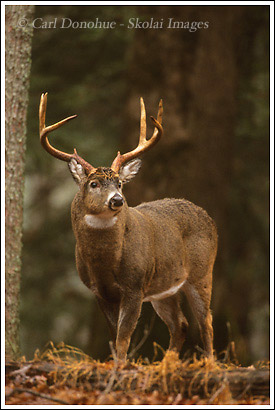
Whitetail buck, Cades Cove, Great Smoky Mountains National Park, Tennessee

Whitetail buck, Cades Cove, Great Smoky Mountains National Park, Tennessee

Here is a link to my Whitetail Deer Photos page.

hey Folks,

Here’s one of my favorite images – a whitetail buck photo from the Great Smoky Mountains National Park, in Tennessee.

Cades Cove in November/December is one of my FAVORITE places, and I’ll miss not being there this year, the 3rd year in a row that I’ve not been there. When I was in Atlanta, in years gone by, I’d look forward every year to heading up to the Cove to photograph the whitetail deer rut.

The bucks are in their prime this time of year, and truly a glorious creature. One of the treats of returning each year was to run into the same bucks, year after year, it’s akin to running into old friends. This buck is one of the larger bucks, with a great wide 8 point rack, easily identified by his tiny little brow tines, the shorter ones directly above his ears. He was ever such a placid animal, though he did get a little feisty when other bucks came into his domain.

Continue reading

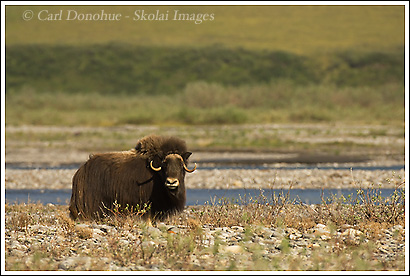
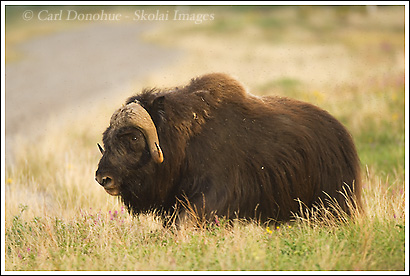
Wild MuskOx photo, Arctic National Wildlife Refuge, ANWR, Alaska

Wild MuskOx, Arctic National Wildlife Refuge, ANWR, Alaska.

Hey Folks,

Here’s another Musk Ox photo, from the Canning River, Section 1002 area of the coastal plain of the Arctic National Wildlife Refuge, Alaska.

This trip was the first time I’ve seen MuskOx, and it was great to get some images. They’re almost a prehistoric looking creature, very cool, and reasonably calm, if approached carefully.

We took over an hour just slowly getting closer and closer – but photos were few and far between, as they tended to stay in the willows and thicker brush, making decent photos hard to come by. Patience was rewarded, and I got this and a few other images that I liked.


Muskox photos, Arctic coastal plain, Alaska

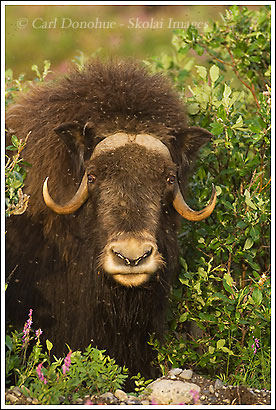
Muskox photos, Arctic coastal plain, alaska.

Here’s another image of muskox from our trip to the arctic coastal plain this past summer, and a float trip down the Canning River in the Arctic National Wildlife Refuge. As you can see from the muskox photo, the mosquitoes were out in the droves this summer in the arctic.

Fortunately the winds we experienced kept them down much of the time – but I had headed out to shoot these guys in shorts, a long-sleeved shirt and a ball cap – not really the gear I needed to keep the bugs at bay. After about 15 minutes of nonsense, I left the muskox, went back and donned some more suitable attire, and returned to the fray.


Muskox photos.

Cheers

Carl

MuskOx Calf photo, coastal plain, arctic Alaska

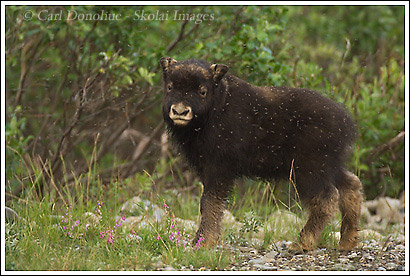
MuskOx calf, coastal plain, arctic Alaska.

Hey Folks,

As I don’t have anything new to post from the Skolai Trip I did last week, I’ll post a few more Muskox.

This young calf was hanging around with his mom and the herd one afternoon, and it took quite a while before I got a decent opportunity to shoot a portrait of the calf. Muskox really protect their young well, mostly by hiding the calves behind the adults, and often keeping them in the thicker brush. Finally this calf ran out in the open, stopped and looked back, and I took this photo. You can see the Mosquitoes were plentiful up in the arctic this summer.

What makes a baby muskox so incredibly cute is that they look like a cross between a miniature bison and a very grumpy, overgrown rug. Those tiny, stubby horns haven’t quite formed yet, so they just have these fuzzy little nubs on their heads while they try to figure out how to be intimidating. A baby muskox spends most of its time in a state of high-speed play, darting between the legs of the adults like a hairy little pinball. It is a hilarious contrast to see a frantic, fluffy calf bouncing around a group of adults that are essentially unmoving boulders of muscle and fur.

Despite the cuteness, life for a baby muskox on the coastal plain is serious business. They are born into one of the harshest environments on the planet, often arriving while there is still plenty of snow on the ground. To survive, the baby muskox relies on a specialized layer of underwool called qiviut. It is one of the warmest and finest natural fibers in existence, and even these calves are packed into a dense coat of it from day one. This insulation is what allows them to withstand the brutal arctic winds that would freeze most other newborns solid in minutes.

The social structure of the herd is the ultimate insurance policy for every baby muskox. When a predator like a wolf or a grizzly bear shows up, the adults don’t run. Instead, they form a defensive circle with their massive heads and horns facing outward, tucking each baby muskox safely into the middle of the huddle. Watching a calf peek out from behind a literal wall of thick fur and sharp horns gives you a real appreciation for their survival strategy. They might be the cutest animals in the north, but they are born into a world that is anything but soft.

Muskox photos.

Cheers

Carl
Bull MuskOx photo, arctic coastal plain, Alaska

Bull MuskOx, arctic coastal plain, Alaska.

Hey Folks,

So I just got back in from a nice long trip to the Arctic National Wildlife Refuge (ANWR). I drove up to Fairbanks, picked up Bob and Erika, a lovely couple from Florida, and we headed on up the Dalton Highway, almost to Deadhorse/Prudhoe Bay, where we met our pilot, picked up a raft, and flew in to the headwaters of the Upper Marsh Fork of the Canning River.

It was quite an adventure, an their first time in the Refuge, so we all had a great time. I’ll tell you some more about it over the next week. Before we flew in though, we were told about a small herd of MuskOx just north of us, on the Sag river.

With some time to kill, and gigabytes on the memory cards, we figured we’d go take some pictures.

Continue reading

Caribou Herd, Wrangell St. Elias National Park, Alaska

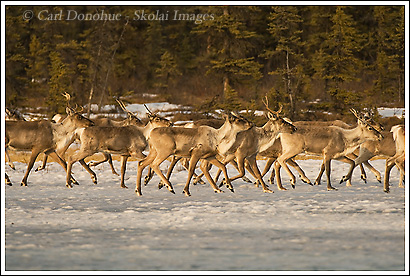
caribou herd crossing frozen lake, wrangell st. elias national park, alaska.

Hey Folks,

Here’s a photo of part of a small herd of caribou I ran across in Wrangell-St. Elias National Park a few days ago. I visited the north side of the park briefly, before having to head to Anchorage for a week. The north side of the park is so different to the middle and southern side I’ve spent most of the winter on so far (I say ‘winter so far’ because we’re currently in the middle of a predicted 2′ dumping of snow – which, in my book, means winter isn’t over).

My trip up to the northside, coming to the park from Nabesna Rd, has me all fired up already to spend some more time there both this summer and the fall and winter .. I think wildlife are more prevalent on the northside – I saw moose and caribou on one afternoon .. lots of caribou, probably over 300 in a few hours, scattered along the way in bands of between 20 and 50.

They’re super skittish though, and difficult to photograph.

I spent the better part of an afternoon trying to get close enough for some decent photos, with little luck. This band I found out on a still ice-covered lake, and with a little patience (on my part) and a lot of luck (on my part) and much tolerance (on their part) I managed a few photos. The light was awesome.

Continue reading