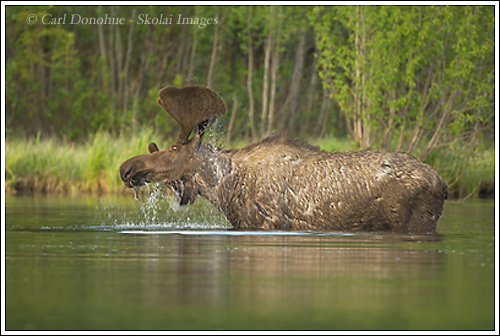
Category Archives: Wildlife

Wildlife Photos. Notes and thoughts related to wildlife photography.

Brown bear cub photo

A young brown bear (Grizzly bear, Ursus arctos) cub. Brown bear cubs will stay with their mother for 2-3 years before venturing out alone. Brown bear cub, Katmai National Park and Preserve, Alaska.
Brown bear cub photo. A young brown bear (Grizzly bear, Ursus arctos) cub. Brown bear cubs will stay with their mother for 2-3 years before venturing out alone. Brown bear cub, Katmai National Park and Preserve, Alaska.

Hey Folks,

Here’s a young spring bear cub photo from the recent photo trip I led to Katmai National Park and Preserve. This youngster had 3 siblings, and it was a real treat to get to see them play and tumble together.

Catching a photo of one by himself, without the others in the frame, was more difficult than one might guess it would be. There were almost always other bears in the frame.

Last year, for some reason, there were not too many spring cubs in the area at all, but this year the area was home to quite a few. They’re such a blast to photograph, and oh-so charismatic. Each has his/her own character, and some of them are unbelievably plucky little critters. We watched one take quite a dunking from his mother, after he tried to steal a salmon from her. She grabbed him in her mouth, shook him back and forth like a rag doll, and literally buried him in the river. I thought ‘well, that’ll teach the little guy a lesson’ – Hardly! He came up growling louder than before, grabbed the fish in his mouth, and took off with it before his mother could even snap at him. They’re just way too cute!

These little baby bears are born in the dark of winter, tiny and defenseless. Their mothers-to-be enter a den in late fall, usually anywhere from late October through November. Brown bears almost always enter their den during a snow storm, or immediately before a snow storm. The theory most folks ascribe to is the snow storm will cover both the entrance and the tracks leading to the den, hiding both the bear and the den’s location.

Late January or early February, though sometimes as late as March, the cubs are born, blind and virtually helpless.

Continue reading

Grizzly Bear and Fall Colors

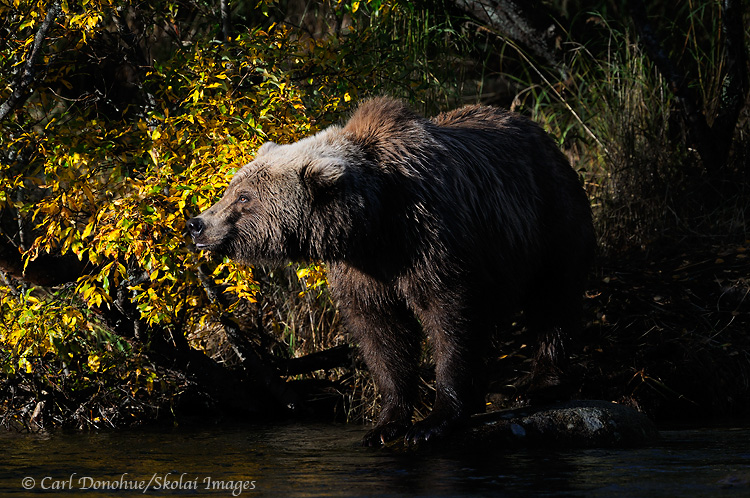
Grizzly bear and fall color, standing in warm afternoon light on the edge of a salmon stream. Ursus arctos, brown bear, Katmai National Park and Preserve, Alaska.

Hey Folks,

As I mentioned in a post a few days back, I am pretty excited about some of the grizzly bear photos I took on this most recent trip to Katmai National Park. Over the years I’ve spent so many weeks there, shooting and re-shooting photos of grizzly bears, that it can be difficult to really bring home some new images. This photo is one I was super happy with.

I took, of course, countless images of bears eating salmon, chasing salmon, catching salmon, standing around, sitting down, sleeping, fighting, playing, etc. But what I really wanted to capture was some dramatic images in dynamic weather or dynamic lighting situations.

Continue reading

Dall Sheep Ram, Denali National Park

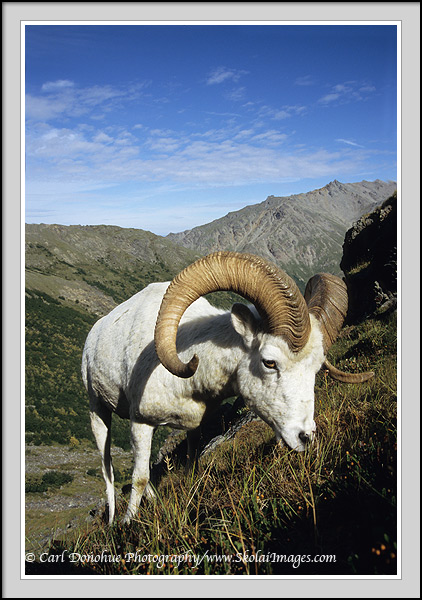
A dall sheep ram approaches while it grazes on the high alpine tundra, DenalI National Park and Preserve, Alaska.

A dall sheep ram approaches while it grazes on the high alpine tundra, Denali National Park and Preserve, Alaska.

Hey Folks,

Here’s a Dall sheep ram I photographed a few years back, when I was doing a hike in Denali National Park and Preserve. It’s been a couple of years now since I spent any time in Denali National Park (the last time I was beyond Savage River was on a trip with my parents, in 07). As much as I enjoy my project in Wrangell-St. Elias National Park and Preserve, I do miss photographing in Denali. Hopefully this next year my schedule will work out such that I can squeeze in some time in Denali – and find this Dall sheep ram again.

It’s quite an experience having a full curl ram approach within inches of your eyeball. I remember I was lying down (as I wrote about here in an earlier post), and this ram got up from his slumber,

Continue reading

Grizzly bear and fall color

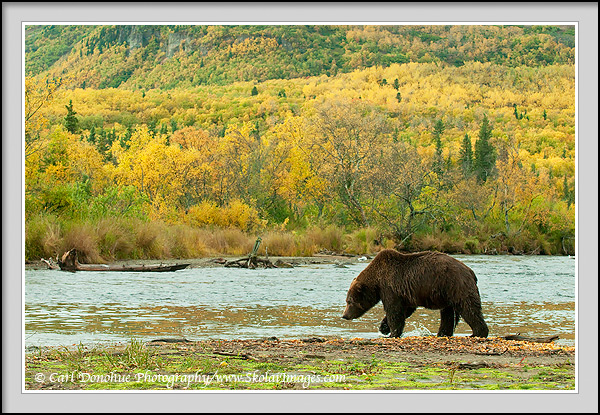
A grizzly bear stands poised beside Brooks River, vibrant fall colors in the background, as he fishes for Sockeye Salmon. Katmai National park and Preserve, Alaska.

Hey Folks,

As I said in a recent post, on my recent trip to Katmai National Park and Preserve I really hoped to make some images that featured not only the great grizzly bears, but also the awesome fall colors of the boreal forest .

The Black Cottonwoods of the area provide the perfect background for photographing grizzly bears, but rarely do photographers seem to combine the 2. Most folks come up to Alaska and shoot the bears in the summer, and I think they’re missing out.

The classic shot of a grizzly bear fishing for salmon at Brooks Falls is nice, and only generally possible mid-summer, of course, but there are a lot of other opportunities around in the fall that can be equally exciting.

Great fall colors make stunning backdrops, and can really bring a vibrancy to the image. Stepping back, zooming out, and letting the scene dictate the photos is often the key.

In this photo I enjoy the sense of relationship between subject and environment – the dichotomy is largely only a function of our thought processing. The idea that the “environment” is something other than everything is a little peculiar; the subject IS the environment, as equally as the environment is the subject. There is really no difference between the bear and his habitat.

Continue reading

Grizzly Bear photos

Alaska brown bear photo

I’ll compile a few older bear photo blogs into a collection here for you. Easier to review if you’re interested

Brown bear (Ursus arctos), at Hallo Bay, Katmai National Park and Preserve, Alaska.

Hey Folks,

Just returned from a week on the Katmai coast photographing brown bears. This was a new trip for me this year; I’d not been over to this specific location, or at this time of year, previously.

It was a grand trip; flying out of Kodiak, and spending a week on a boat along the coast, shooting bears in gorgeous soft summer light. My personal photography priority for the trip was bears in the landscape. I also wanted some cool “behavioral” photos, which included bears clamming at low tide, sparring with one another, and even mating. Cool stuff to shoot.

Shooting mid-summer in Alaska requires a great deal of flexibility; if the weather is clear and sunny, the best light (in this area) is at 9:30pm – 11pm, and 5:00am – 6:00am. So by the time we’d get back from a shoot, it might well be after midnight. Getting back up at 4:30am to shoot again is a rough gig. On the other hand, if the skies are overcast, we’d shift to a more routine schedule, and head out around 8am.

Switching back and forth from one schedule to the next, day to day, is hard and extremely tiresome. I slept pretty well when I got home.

And, speaking of getting home, a good tip is to make sure your luggage doesn’t get left on the boat when you fly back to Kodiak – especially if the specific piece of luggage holds your wallet and ID.


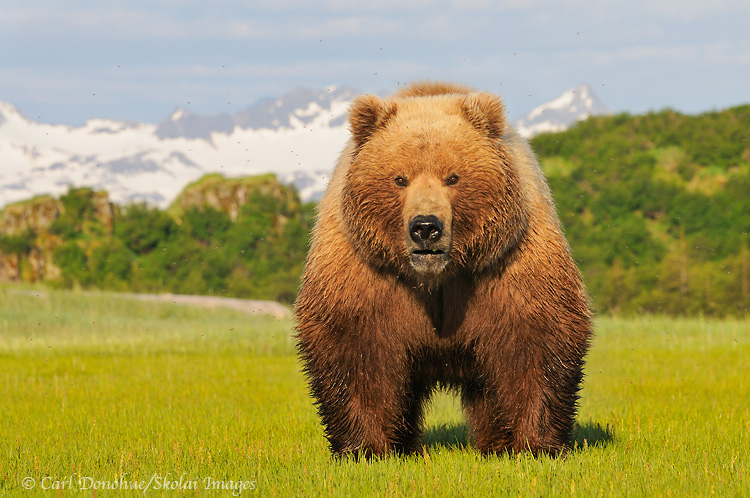
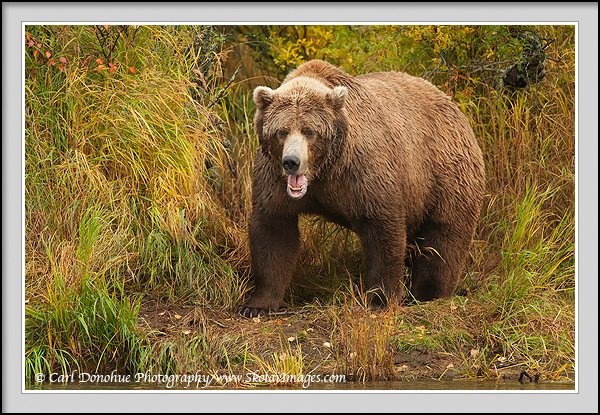
An adult grizzly bear opens its mouth wide, teeth bared, Katmai National Park, Alaska.

Hey Folks,

OK – all the whining about ‘no bears’ brings us back to the grizzly. This adult male was kind of enough to give me a few cool poses, of which I think this is one of my favorites. There’s little more to be said other than ‘bears rock’.


4 Grizzly Bears

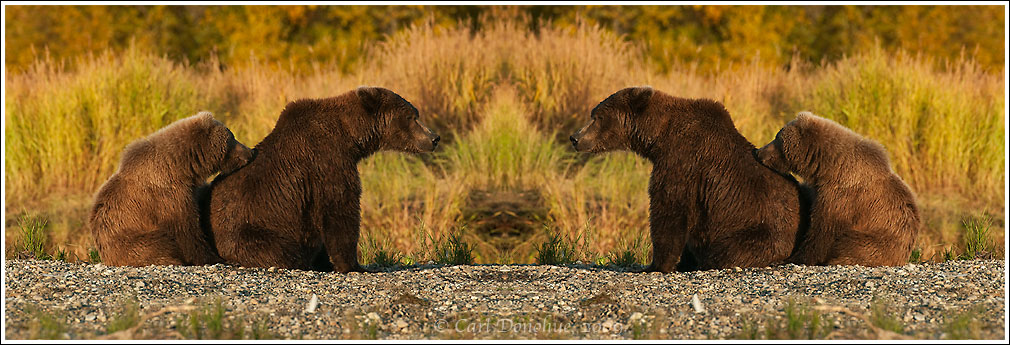
A digital composite of a grizzly bear sow and cub, flipped and doubled.

While I’m going through my recent images, I processed this one and thought I’d post it for kicks. It’s a simple computer trick, which even a cursory look unveils. All I did here was copy the image, flip it horizontally, and paste it alongside the original. I got a split second to shoot this scene, as the bears didn’t hold the position very long – another bear came by and the cub backed away from his nonchalant mum. I was thinking about the composite when I took the frame, remembering the shot I made a number of years back (on this page).

I don’t do a lot of this kind of photoshop trickery, but sometimes it’s fun. I’m interested to hear if folks like this image or not.


Brown bears Playing

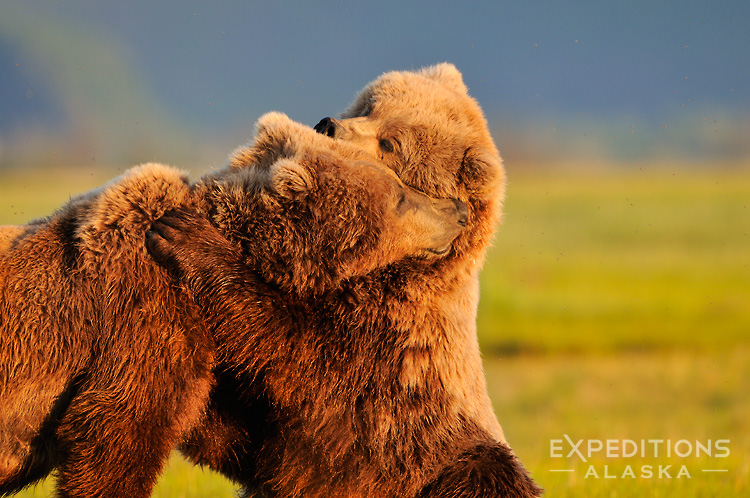
2 adult brown bears (Ursus arctos) play together in an embrace. Hallo Bay in June/July is a great time to see and photograph bear behavior like this.
2 adult brown bears playing (Ursus arctos) together in an embrace. Hallo Bay in June/July is a great time to see and photograph bear behavior like this.

Hey Folks,

Another photo from this past summer when I led a photo tour to Hallo Bay and the coast of Katmai National Park and Preserve here in Alaska. I’ve been photographing brown bears for many years now, and return to the Alaskan Peninsula every summer to watch and photograph these creatures. They’re simply an awesome animal to see, whether its up close and personal like this, or from a distant ridge on a mountain hike somewhere.

I intentionally picked late June for this particular tour with the hope of catching some interaction between the bears, and especially mating behavior. Brown bear breeding season is anywhere from late May through mid-July, with some exceptions even being later. Generally, early summer is the time for brown bears’ breeding season.

Continue reading

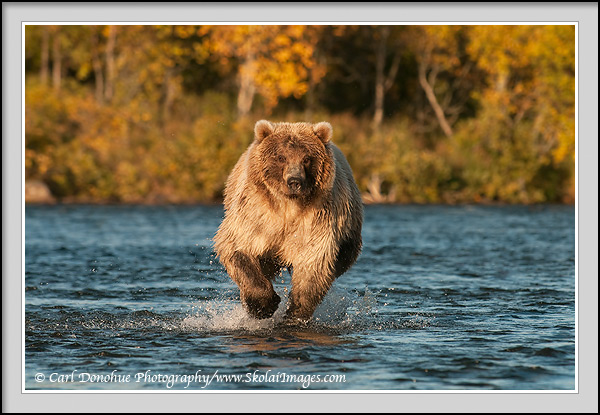
Grizzly bear charging

09_SEP1071

Hey Folks,

They say 3 is a lucky number – so here’s my third grizzly bear photo in a row. This was one of the prettiest grizzly bears I’ve seen, a really light blond color, with darker bands around the lower legs and face – simply a beautiful animal. I spent a lot of time shooting this bear, and got a number of runs like this, the bear coming directly at me, great light, nice background – what’s there to not like?

So what exactly is going on here?

Continue reading

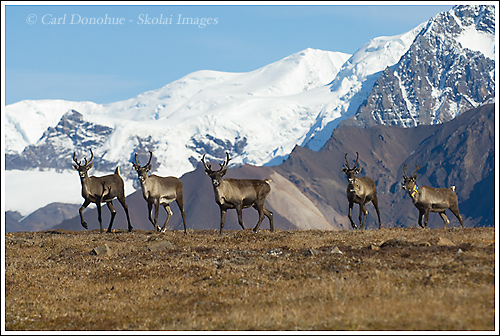
Caribou, Skolai Pass and the University Range, Wrangell-St. Elias National Park

Woodland Caribou herd, Skolai Pass, the University Range in the background, Wrangell-St. Elias National Park, Alaska.

Hey Folks,

Here’s another image from my recent trip to Skolai Pass. This, along with the previous image posted of Mt. Bona and Mt Churchill, was taken on the first day of our arrival in the pass. Pretty nice day, eh?

These caribou are part of the Chisana Herd (pronounced ‘Chushana’) and are, according to legend, the only Woodland Caribou herd in Alaska, and maybe ought be listed on the Endangered Species Act, possibly the strongest environmental legislation in the US.

Woodland Caribou are found mostly in Canada (possibly a very small population in Idaho and Washington – often referred to as a separate subspecies, Mountain Caribou), with the great herds of Alaskan caribou, such as the Porcupine Herd, or Central Arctic Herd of the north slope, like the caribou more seen in Denali National Park, being Barren Ground Caribou.

Continue reading

Small Mammals in Wrangell-St. Elias National Park

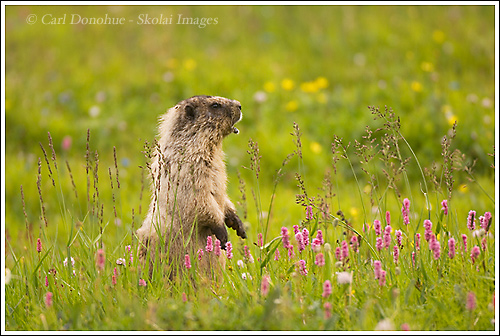
Hoary Marmot Photo

Hoary Marmot, Wrangell-St. Elias National Park, Alaska.

Last week I spent the week up at Skolai Pass, Wrangell-St. Elias National Park, Alaska. After years of hoping to photograph a marmot in the park, and having seen many of them but never actually managing to photograph one, I found this guy, right by where we camped. I made a number of nice images of him, but this one I like the most. The pink flowers in the foreground are called Pink Plumes.

I’ll be out in the backcountry again this week, hiking from Iceberg Lake to Bremner Mines. I’ll post again when I return.

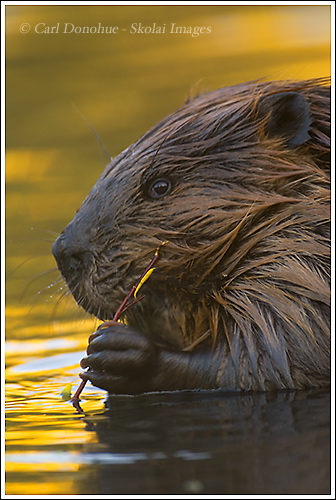
Beaver, Wrangell-St. Elias National Park, Alaska

An adult beaver browsing on willow leaves in a pond, Wrangell-St. Elias National Park, Alaska.

So this last week I spent on the north side of the park, exploring clouds and rain and drizzle. The glory of fall in Alaska. I found this small beaver  pond, replete with beaver, so I spent a few hours photographing them in their little demesne. The pond was host to a couple of adults, male and female, and their offspring, 3 young kits. It was fascinating to watch them go about their business (mainly eating) for hours on end.

The ole saying ‘busy as a beaver’ could equally hold as ‘hungry as a beaver’; all these critters do is eat, it seems. I watched this male swim to the pond’s shore, clamber out of the water, saunter down the trail, then reappear maybe 10 minutes later with a large willow sapling clenched between his teeth, dragging the branch behind him, as he re-entered the pond, and swam back towards his lodge.

I was super fortunate that he stopped to eat right in front of me, and during the course of his dinner, all of the other beavers came by, at some point, to scrounge a branch or 2 off his sapling. Apparently willow leaves are good eating for a beaver. The ruckus that followed was almost comical, the various assortment of noises being surprisingly diverse.

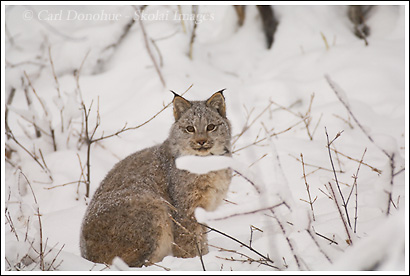
Wild Lynx, Wrangell-St. Elias National Park, Alaska

Wild lynx, Wrangell St. Elias National Park, Alaska.

I promised my buddy Ron I’d post this. Hey Ron! ?

This is a wild lynx, from Wrangell St. Elias, photographed this last winter. I was pretty lucky to get this. I couldn’t believe my luck when I spotted this gorgeous cat, and hoped and prayed I’d get a photo.

The lynx obliged me. I wish, of course, the image wasn’t quite so cluttered, particularly his little white beard created by the snow-covered branch in the foreground, but it’s the first photo I ever got of a lynx, so I’m happy enough, I reckon. He let me fire a few a frames, and then bounded off into the brush.


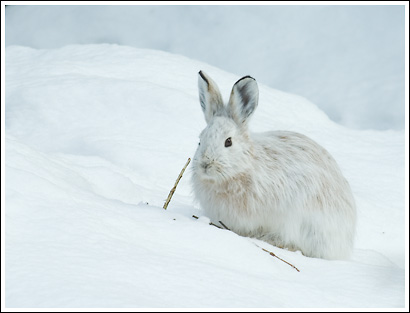
Snowshoe Hare, in winter, Wrangell St. Elias, Alaska

snowshoe hare in white winter coat, on snow eating a willow stem, wrangell st. Elias National Park, Alaska.

Here’s an interesting photo. As winter comes to an end, the snowshoe hares are hungrier than ever, which means I get to see them a little more. It also makes them more vulnerable to their primary predator, the lynx.

This one is just starting to change his coat back to the brown summer coat. You can see the black tips on the ears, which don’t go white, even in the mid of winter. As winter goes along, the hares get hungrier and hungrier – there is not a lot of fodder for them once the snow covers everything. You can see the willow branch this one was nibbling on when I found him.

The hares eat the bark right off the saplings .. some of the saplings around the area have been completely stripped, while others haven’t been touched. I have no idea what makes one willow sapling more delectable than another, but the snowshoe hares seem to know.

I’ll keep poking around and see if I can find some more hares to photograph in the next few days. There’s a lot of them around, but they’re pretty skittish, and don’t hang around too much when I stumble along.

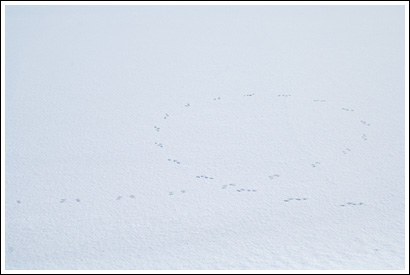
Snowshoe hare tracks in Wrangell St. Elias National Park

snowshoe hare tracks Wrangell St. Elias National Park, Alaska.

This image is from my recent trip.

I was walking along the edge of the lake here, on the ice, and following this set of snowshoe hare tracks. Out of nowhere they venture out on to the ice and do this really cool little loop, then back on course.

I thought it was awesome.

I know the photo’s hardly wall-hanger, but the scene caught my eye – it just seemed to interesting to wonder why the little rabbit walked a perfect circle like this .. maybe he was just exuberant about it being winter, and such a lovely day. Maybe he had just had his van fixed and was in a good mood. Maybe he just felt like walking in a circle.

Whatever the reason, I thought it was pretty cool, so I took this photo.


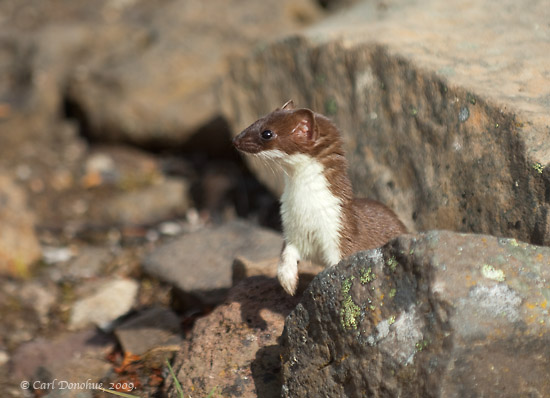
Least Weasel photo

Least Weasel photo, on a rock, Skolai pass, Wrangell-St. Elias National Park, Alaska.

This photo is of a weasel (or ermine), from Skolai Pass in Wrangell-St. Elias National Park. Member of the mustelid family, the Least Weasel is the coolest little critter . imagine a small, sleek ferret on crack.

I’ve never tried to photograph an animal where I go so many images of his behind, as he raced off, or even with the animal completely gone .. this guy was SO fast, I barely managed to catch him at all .. the few moments he’d stop, look around, pose, and be gone, in a dash for cover. This photo is about 60% of the full frame version.

This photo was maybe a few hundred yards into our walk, so it was exciting. To be shooting a cool little guy like this within minutes of starting our trip was simply awesome. On the first day of our trip I managed to take my only images of a weasel from the park, my now favorite caribou image I’ve taken in the park, and my favorite image of Mt. Bona. And earlier in the morning we’d had some alpenglow on Mt Blackburn, as well. What a day.

So that’s it for the weasel. He’s running around Skolai Pass chasing voles, shrews and ptarmigan, and maybe the odd ground squirrel. I hope has a great winter, and is around to see again next year. What a treat it was for our group.

Cheers

Carl
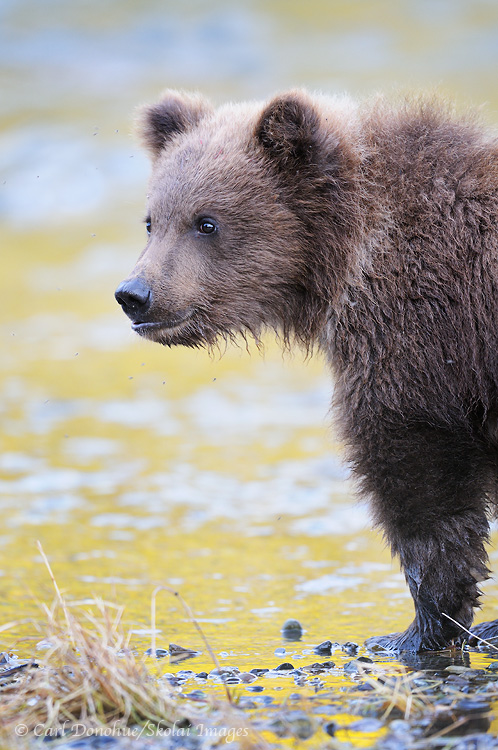
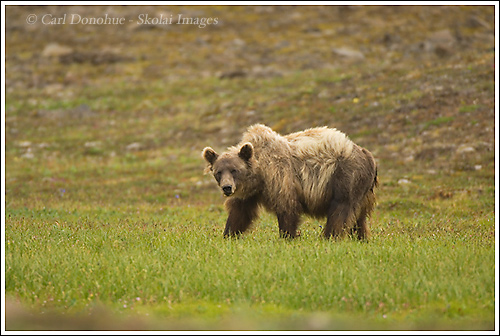
Grizzly Bear, Wrangell-St. Elias National Park, Alaska

A grizzly bear (Ursus arctos) on the tundra in Chitistone Pass, Wrangell-St. Elias National Park, Alaska.

Hey Folks

I apologize for the long delays in posting here – it’s been busy this summer, with backpacking trips, and I really haven’t taken the photos I was hoping to, either. Either smoke from numerous wildfires, bad timing, or bad weather have made the summer not a great one for me, photographically, so far. Hopefully that’ll change a little as fall approaches.

This is a grizzly bear that I’ve observed in the Skolai Pass the last few years – I saw him as a younger, immature or subadult, in 2007, again last year and this year back in July.

Continue reading

Bull Moose, Long Lake

Bull Moose (Alces alces) shaking water from antlers, in a lake, springtime, Wrangell-St. Elias National Park, Alaska.

Hey Folks,

Here’s a quick one while I’m hiking. I saw this bull moose a few times this spring, feeding on the aquatic plants that grow on the lake bed this time of year. Quite a rack for early June. He’ll be quite a sought after moose come this fall when the subsistence hunters look around Wrangell-St. Elias National Park for their winter meat. As much as I like for my friends to eat well, I hope nobody gets this guy.

Cheers

Carl