Tag Archives: conservation

Arctic National Wildlife Refuge & Wilderness Designation

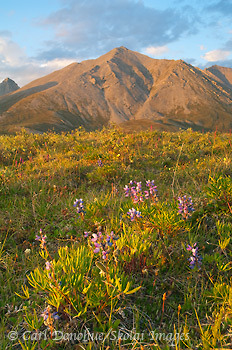
Arctic lupine and Brooks Range, ANWR, Alaska.
A small bloom of Arctic Lupine in the Brooks Mountain Range catch last light of the summer day. Land of the midnight sun, the Arctic National Wildlife Refuge, or ANWR, in arctic Alaska where the coastal plain meet the Brooks Mountain Range.

Hey Folks,

Another photo from the Brooks Range, and the Arctic National Wildlife Refuge.

Back in September the US F&WS (Fish and Wildlife Service) announced, as part of their Comprehensive Conservation Plan, that “the Service will conduct wilderness reviews for three Wilderness Study Areas (WSAs) for potential inclusion within the National Wilderness Preservation System. These three WSAs encompass almost all refuge lands not currently designated as wilderness”. This is good news. I’ll reiterate my favorite part of the quote: “These three WSAs encompass almost all refuge lands not currently designated as wilderness.

There are numerous steps involved, and, if recommended by the US F&WS, approval is required by the Dept Director, the Secretary of the Interior, and the President. Then, the final decision lies with the US Congress; the actual authority to designate land as ‘wilderness’.

It’s almost comical, really and I’ve written at length on the issue of conserving the refuge. But such a rigorous and formalized process to meander through in order to deem lands “wild”. Implicit in the word wild is ‘free will’ –  yet not quite so wild as to be free of the rigmarole of official procedure, of course.

Anyone who suggests the 19 million acres of the Arctic National Wildlife Refuge isn’t a wilderness either hasn’t been there or is simply in denial. Perhaps I could say it more clearly this way; if the Arctic National Wildlife Refuge doesn’t qualify for ‘wilderness designation’, then we might as well remove that term from our vocabulary. Surely there is no place more deserving of such designation than the Refuge?

The “wilderness reviews” should be completed by Feb 2011, which will be followed by a released draft, more public comment, more revisions, and hopefully, a final plan and recommendation in May 2012. Apparently wilderness takes careful planning and review; it’s not simply created overnight.

A reminder that Dec 06, 2010, marks the coming anniversary of the establishment of the Refuge; I’m working on a little project for it, and should have it online soon. Stand warned. 🙂

Cheers

Carl

Happy Birthday, Arctic National Wildlife Refuge

Coastal plain photo, Section 1002, ANWR, Arctic National Wildlife Refuge, Alaska.
Midnight sun on the coastal plain, Section 1002, near the Canning river. A small pond on the plain catches a the skies blue reflection. Pond and reflection, coastal plain, Arctic National Wildlife Refuge (ANWR), Alaska. Dec, 2010 marks 50 years since the federal government established the area as a national wildlife refuge.

Hey Folks,

Drill here? Drill now? I think not.

How about “Happy Birthday, and Cheers to the next 50 years!”

This year is the 50th anniversary of the establishment of the Arctic National Wildlife Refuge – “ANWR”, as folks like to call it. A swathe of wild land the size of South Carolina became a federally protected area in 1960, and then established as a wildlife refuge in 1980 with the passing of the Alaska National Interest Lands Conservation Act (ANILCA).

One of the most important conservation measures yet taken by this nation, the Act protects over 100 million acres of federal lands within Alaska; this single statute more than doubled the area of national park and refuge land in the country and tripled the area of federally designated wilderness. Roughly 40%, or 8 million acres, of the Arctic National Wildlife Refuge was (and is) designated wilderness. This one landscape makes up over 7% of the designated wilderness in the United States.

Next month, on Dec 6, 2010, ANWR turns 50 years old. Turn your thoughts northward, and give it a moment. Or several moments. 19 million acres of land this country gifted to itself. It’s a beautiful thing.

I’ve visited the refuge a number of times now, and each year the visit has been unimaginably rewarding. To those who’d rather see it turned into an oil well, I’d ask to what end?

Cheers

Carl

Stuff to Click On – Oct 2010

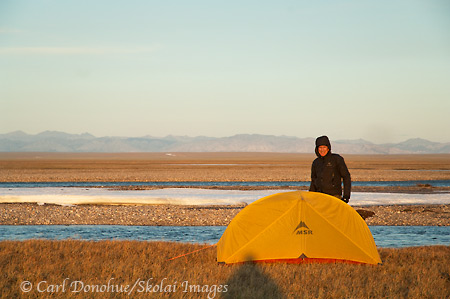
Chuck and his MSR hubba on the coastal plain, ANWR, Alaska.

Chuck and his MSR hubba (tent) on the coastal plain, ANWR, Alaska. We spent 2 weeks rafting the Canning river, and this photo was taken toward the end of the trip. It wasn’t as cold as it looks; Chuck’s from Florida. Good times indeed.

Hey Folks,

I’ve decided to make some changes to the blog and will be trying to get them up and running in the coming months. The first one is in this particular post. I want to post a kind of ‘Clips of the Month’ page; videos, photos, articles, quotes, whatever, that caught my eye during the month. I find nowadays there’s simply so much amazing material getting blasted around the web that it’s about impossible to keep up with even a fraction of it. Facebook posts and Tweets come down the pipe a mile a minute, all pushing (and pushed) down the page, completely gone; disappeared before I’m done reading the actual link; it’s a frustrating race to the bottom. I end up missing most of what folks post out there.

That’s compounded by a popular trend whereby (some) folks think it’s good to simply tweet and post every link that runs across their monitor – which wastes an awful lot of time for the receiver. Rather than simply tweeting every single post that says “Hey, check out this totally awesome photo”, I thought it might be useful to post a collection of links that (a) I’ve actually visited/read/watched, and (b) I honestly thought were not just above the banal, but that I felt were pretty cool/interesting/and yes, even awesome. Hopefully posting them as a blog page makes the content a little less transient, as well. We’ll see if the idea is a good one or not. It’s simply a collection of links to articles, photos, etc, that I ran across, one place or another, and thought were actually worth sharing. Continue reading

Extreme Environmentalists, the Gulf Oil Disaster and ANWR

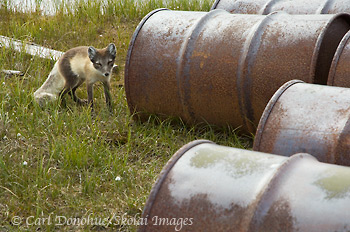
Arctic fox and oil barrels on the coastal plain, Arctic National Wildlife Refuge, Alaska.
Arctic fox and oil barrels on the coastal plain, Arctic National Wildlife Refuge, Alaska. Please click on the image to view a larger version of the photo.

Hey Folks,

Excuse my rant; but, this is my blog, and I’m about to wander in the mtns for a while. Before I go, I need to speak out.

I read earlier today of ex-Alaska Governor Sarah Palin’s latest comments about the current disaster in the Gulf of Mexico. She states “Radical environmentalists: you are damaging the planet with your efforts to lock up safer drilling areas”.

Her basic premise is that the Deepwater Horizon catastrophe is the work and responsibility of “extreme environmentalists”. Let’s disregard, for now, the fact that she’s been a proponent of offshore drilling for years now (including her 2008 run for VP where she repeatedly claimed that Drill Baby, Drill “also means safely tapping into our offshore sources, safely, environmentally safe”. In her own words, whilst debating then-Senator Joe Biden she stammered “You even called drilling — safe, environmentally-friendly drilling offshore — as raping the outer continental shelf. There — with new technology, with tiny footprints even on land, it is safe to drill and we need to do more of that.

“friendly”? If it weren’t so sad it would be farcical; what the hell is “friendly” about extracting crude oil from beneath the ocean? Makes me wonder what kind of “friends” some of these people keep.  If one of my friends came over to the house and started drilling a hole 20 000′ into the lawn I’d say they’re outta their mind.

I’ve no problem with a discussion of the collective responsibility owned by our society. I hopefully made that clear in my earlier post here. But I won’t absolve the oil industry of their responsibility, nor the clowns who would reduce a discussion of the energy policy of the world’s largest energy consumer to a 3-word bumper-sticker slogan: “Drill Here, Drill Now”  of theirs, which is the intent of Palin’s outburst. Sarah Palin’s remarks, along with this childish assessment from Ted Nugent is not an honest critique of any social construct at all. In fact, it’s nothing more than the opposite of that; an attempt to divert attention from the direct and very palpable targets of hella-oil, political corruption and bumper-sticker political campaigns to a somewhat more nebulous, transparent target. That is intolerable.

Continue reading

A Tragedy in the Gulf of Mexico

Hiker playing Native American Indian flute on the arctic coastal plain, Arctic National Wildlife Refuge (ANWR), Alaska.
Playing a Native American Indian flute on the arctic coastal plain, Arctic National Wildlife Refuge (ANWR), Alaska. Please click on the image to view a larger version of the photo.

Hey Folks,

I’ve been wanting to write for the last week about the current Gulf Oil disaster, but haven’t really been quite sure what to say. There are simply so many tangents to this mess that I’ve not known where to start. The deaths of 11 people seem, unfortunately, to fade into the melée of concern about big oil, political ineptness, poisoned ecosystems, fathomless litigations, ad infinitum. The web we weave seems larger than the spread of oil.

It makes sense, to me, to start at home. The reality is that this catastrophe stares us right in the eyeball. The mirror reflects our own lives – I drive a car, I love my gore-tex and silnylon tents, my synthetic-fill jacket, my polycarbonate cameras. I eat fresh bananas and whole grain breads shipped here from afar. My computer was flown directly from Shanghai, China. The world I live in is a fossil fuel world. That world includes crude oil belching from the ocean floor into the Gulf of Mexico, and on to Gaia knows where.

So I bear responsibility in this mess; I want cheap gasoline, cheap oil. I complained about the soaring gasoline prices just 2 years ago. I failed to demand that the federal government not exempt BP from an environmental impact study. I failed to demand that Minerals Management Services mandate a remote-control shut-off switch on all drilling operations. I failed to demand that the oil industry follow the strictest, safest procedures possible.

Continue reading

Manufactured Landscapes – a film review.

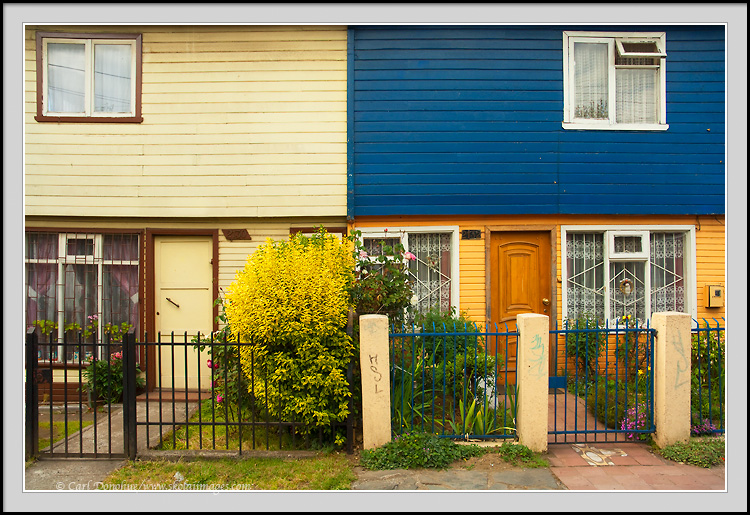
Colorful duplex and garden, Orsono, Chile.

Colorful duplex and garden, Orsono, Chile. Please click the image to view a larger version of the photo.

Hey Folks,

I’m depressed. I just watched “Manufactured Landscapes”, (2006) and if you haven’t seen it, I recommend you do. It’s a pretty intense documentary, featuring amazing photography by Edward Burtynsky. Burtynsky creates some powerful imagery of some of the most unlikely subjects – largely industrial wasteland. Coal mines, dams, factories (the opening shot shows the inside of a factory over three quarters of a kilometer long), parking lots, construction sites, destruction sites, you name it. It’s compelling stuff – the beauty in his photos is moving, yet discomforting. The reality he brings to the viewer is a bit overwhelming; this stuff IS our world, today.

The film is set in China, largely, though the narration points out that this industrial development is global; almost all of the products being pieced together in factories throughout China consist of raw materials shipped in from around the globe, then shipped back off to meet demand overseas. The stark reality here is that China’s environmental problem is our problem; insatiable demand from the “developed” world is altering not just the landscape, but the land itself. Continue reading

The Baker River and Bob Marley

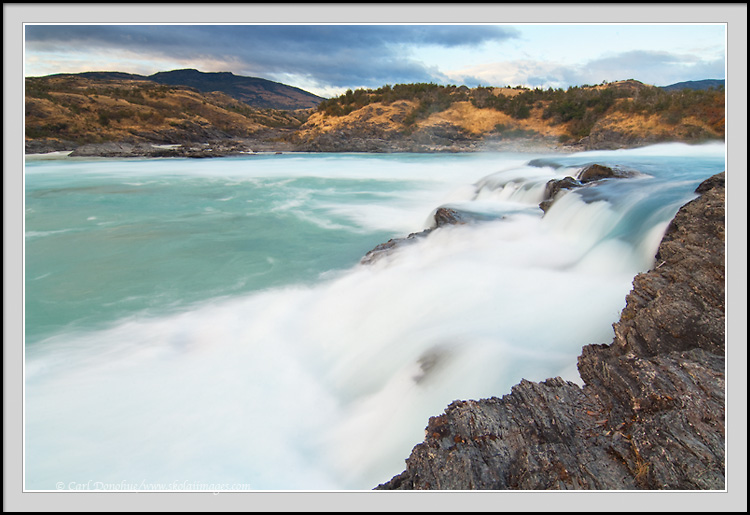
Waterfalls, Baker River, Rio Baker, Patagonia, Chile.
Waterfalls, Baker River, Rio Baker, Patagonia, Chile. Click the thumbnail to see a larger version.

Hey Folks

“How many rivers do we have to cross, Before we can talk to the boss, eh?” – Bob Marley, “Burnin and Lootin'”.

Today, Feb 6th, 2010, is the 65th anniversary of Bob Marley’s birthday. Bob is one of my highest musical heroes, and this tune, of all his great songs, is probably the one that I love the most. So, in honor of the great Bob Marley, go a listen to his classic ‘Redemption Song‘ that I recorded a few years back with my friend Steve on vocals.

I thought this photo would be a fitting accompaniment. This photo is of the waterfall on the Baker River, beginning of a series of Class 5 and Class 6 rapids through an unbelievable canyon.

Continue reading

Environmental Discourse – a rant

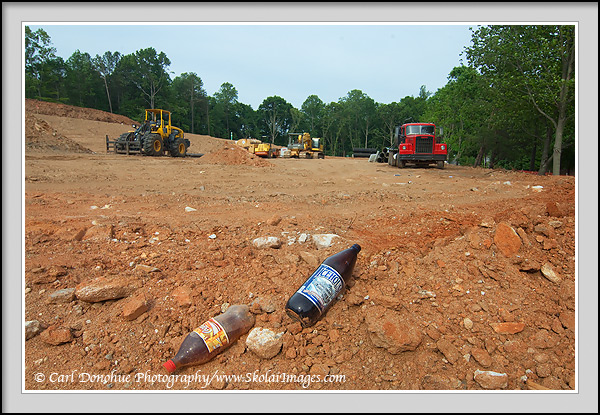
Trash bottles and construction equipment on construction site, Marietta, Atlanta, Georgia

Trash bottles and construction equipment on construction site, Marietta, Atlanta, Georgia

Hey Folks,

A word (or rant) about ‘pragmatists’.

How often do we hear people cloak their position in this language, smother their position and use the veil of ‘realism’ as a cover for rationale? The phrase “well, sure, that’s too bad, but we need to be pragmatic .. “ is so often merely an attempt to preserve the status quo. Rather than reach a little further, push a little harder, get a little creative, or honestly examine ourselves and the lives we lead, we fall back on language like “realistic” and “pragmatic” – neither of which solve a problem, and, ironically, express a position often seated on neither pragmatism or realism.

Conversations around environmental issues seem to invoke this veil all too often; “we’d love to leave the caribou alone, and let them roam on the coastal plain, but we need to be practical – realistically, we need oil.” An entire platform was built around this excuse for an unwillingness to change that supporters labelled “Wise Use” – it’s nonsense.

Continue reading

Mt. Blackburn and John Muir

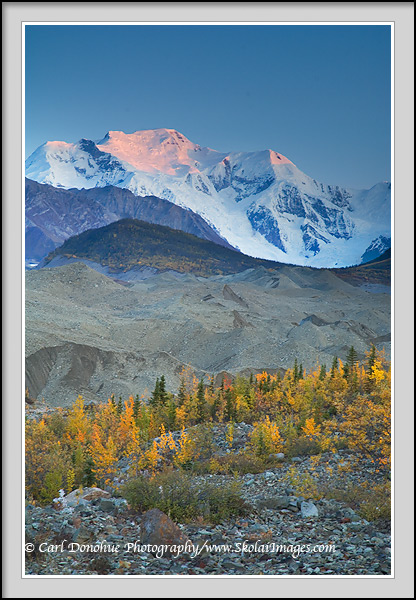
Mt. Blackburn in alpenglow, early fall, Wrangell-St. Elias National Park, Alaska.


Mt. Blackburn stands tall to catch the sun’s first rays of alpenglow, high above the Kennicott Valley, early fall, Wrangell-St. Elias National Park, Alaska.

Hey Folks,

I just visited my friend Mark Graf’s great blog, and read with interest his commentary on mountains and the import and grandeur of nature, the role it can play in our lives. Mark prefaces his post with the legendary John Muir, so I’ll do the same:

“Walk away quietly in any direction and taste the freedom of the mountaineer. Camp out among the grasses and gentians of glacial meadows, in craggy garden nooks full of nature’s darlings. Climb the mountains and get their good tidings, Nature’s peace will flow into you as sunshine flows into trees. The winds will blow their own freshness into you and the storms their energy, while cares will drop off like autumn leaves. As age comes on, one source of enjoyment after another is closed, but nature’s sources never fail. – John Muir, Our National Parks, 1901”

While I think it’s a fantastic photo Mark posted, and a great post, (I’d ask that you read it and the comments that follow) I have to be the lone opponent in the discussion here; 

Continue reading

Orcas Killing Sea Otters

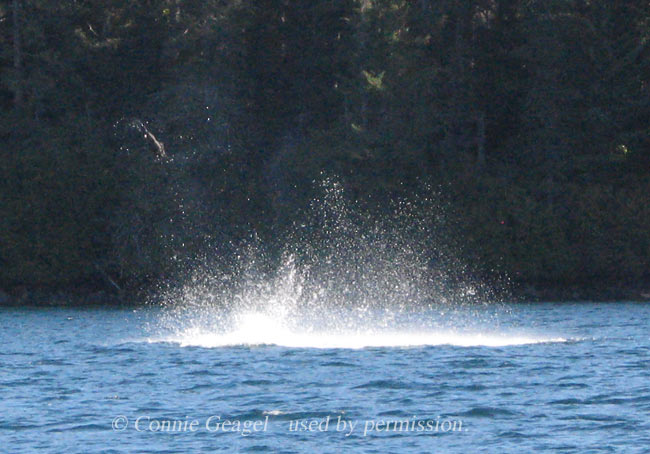
Orca attacking a sea otter pup in Kasitsna Bay, Alaska.

Hey Folks,

Here’s an interesting thought; there’s been a lot of discussion in Alaska on wolf and other wildlife management, particularly ‘predator management’ (aren’t ALL animals not predators of some creatures, and prey of others?), and this raises the issue of orcas (Orcinus orca) and northern sea otters (Enhydra lutris kenyoni). In more recent times, for various reasons, it appears that orcas have begun preying more heavily on northern sea otters in the Southwestern part of the otters’ range – South Central Alaska out across the Aleutian Islands. Orcas, “Wolves of the Sea”, appear to be extirpating the sea otter within this Distinct Population Segment (DPS), and this sea otter DPS is now listed as threatened on the Endangered Species Act. So, what of it? Should the ‘wildlife authorities’ fire up the choppers, Cessnas and Supercubs, hire a sniper or 2, and begin an aerial ‘predator control’ program?

Continue reading