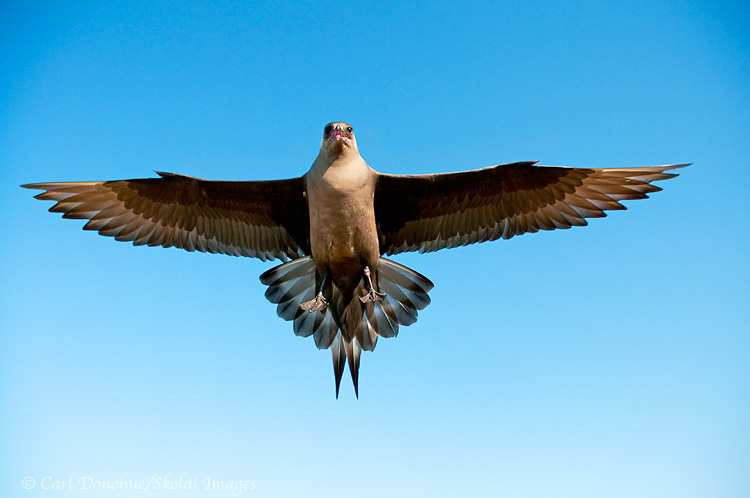
A Parasitic Jaeger (Stercorarius parasiticus) in flight over the coastal plain of the Arctic National Wildlife Refuge (ANWR), Alaska. Click the image to view a larger version of the photo.
Hey Folks,
One afternoon we hiked out around the coastal plain of the Arctic National Wildlife Refuge just because. We must’ve wandered a little close to a Jaeger nest, as this bird suddenly appeared from nowhere and made its displeasure known.
The Parasitic Jaeger is also called the Arctic Skua or the Parasitic Skua. While not a “parasite“, the bird is well known for it’s piracy of other birds’ food. Stealing food is often called “kleptoparasitism” by folks who like to use large prodigious words to describe simple, everyday stuff; scientists, for example.
Though solitary, they’ll often ‘gang up‘ on other birds to steal food. One of the folks on our trip, Steve Weaver, was witness to such an act, when he saw and photographed 4 Jaegers harassing a Red-throated loon, finally driving it from its nest and eating the eggs the loon had been defending. Amazing stuff.
The Jaeger isn’t simply a thief though – the bird also hunts for prey, such as rodents, small birds and insects – Jaeger is the German word for ‘hunter‘.
Parasitic Jaegers look kinda like a gull, but the wings and flight are more falconesque. Pelagic birds, they spend the bulk of their time at sea, coming ashore to breed. The young will often spend the first couple of years of their lives over the seas, not returning to land until they reach breeding age.
Some of you might recall the Long-tailed Jaeger photo I posted previously from a trip to the Arctic National Wildlife Refuge (ANWR) a couple of years ago. The Parasitic Jaegers are closely related, a little larger, but not so large as the Pomarine Jaeger.
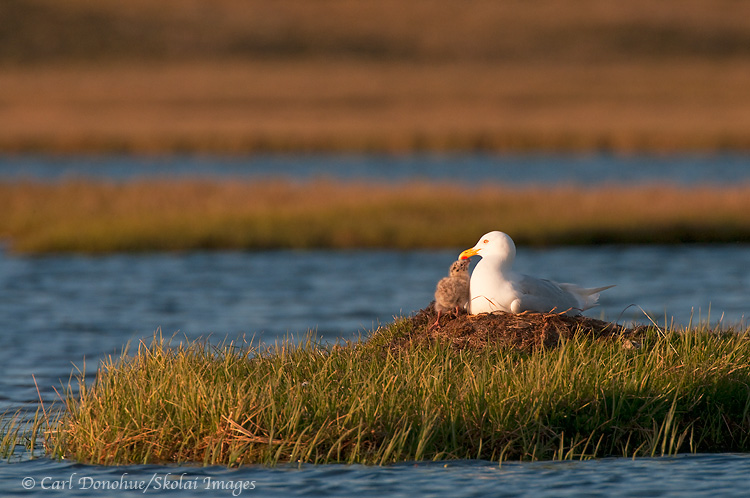
A glaucous gull sits with its chick on a nest on the coastal plain in the Arctic National Wildlife Refuge, ANWR, Alaska, ( Larus hyperboreus). Please click on the thumbnail to view a larger version of the photo.
Hey Folks,
I posted this ahead of time; right now I’m out on a hike, but thought I’d post this image from my recent trip to the Arctic National Wildlife Refuge. Taken on the final evening of our trip, this Glaucous gull (Larus hyperboreus) and chick were a beautiful sight in gorgeous light.
The gulls are pretty common in the refuge in summertime, and can be pretty aggressive in defense of their young. This gull and its mate were busy most of the evening dive bombing a Red-throated loon that was nesting nearby; apparently too close nearby for the gulls’ peace of mind.
Hope you enjoy the photo. I’ll be back from the current trip soon enough, and wil try to post a few more images and some video from the trips. Until then,
Pectoral sandpiper, ANWR, Alaska
Here’s a Pectoral sandpiper photo, taken on our recent trip to ANWR, the Arctic National Wildlife Refuge, Alaska. The shorebirds out on the coastal plain were really a treat – we were so lucky to see a number of cool birds. I’ll try to write a thorough report when I get time.
In the meantime, dig this.
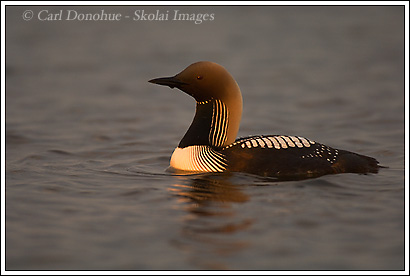
Pacific Loon, Section 1002, ANWR, Alaska
Here’s a Pacific Loon image I got late one evening near the Canning River, on the coastal plain of the Arctic National Wildlife Refuge, ANWR, Alaska. This photo took me quite a while, and a lot of walking, to swing.
I think it was nearly 2am when I clicked the shutter here. I’d been over near this pond earlier, but not able to get close. I ended up walking around for a long time, finding a few other birds to photograph, and then cam back by the loon pond.
This loon and its mate were getting more and more comfortable with this strange tripod-toting creature wandering around, and finally came close enough for me to manage a few photos. I wish the light was a little brighter, and the wind not present, as the rippled effect on the water isn’t as nice as a calmer surface, but one takes what one can in the arctic. At least the wind kept the bugs at bay.
Section 1002, the coastal plain, of the Arctic National Wildlife Refuge is the area hotly debated over with the proposals to drill for oil. I think the wildlife that live there, will be much better off if drilling and gas extraction aren’t allowed; I think we’ll be better off for it, too.
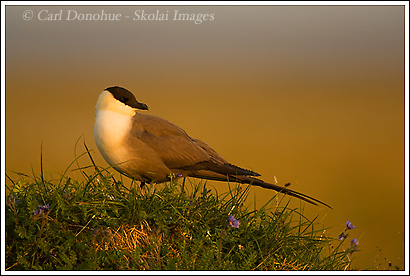
Long-Tailed Jaeger, Arctic National Wildlife Refuge, Alaska
I just got back in from a long and really cool trip to the Arctic National Wildlife Refuge – awesome place! This is a photo of a Long-tailed Jaeger, sitting on a small mound on the coastal plain, taken around 1:00am; gotta love that summer arctic thing!
I’ve got about a million things to do, so this is just a quick short post – but do stay tuned. I have some ground-breaking stuff here, new, never before taken photos from the Refuge, and some discussion that will likely amaze a number of readers – the Arctic National Wildlife Refuge is a topical place right now, with the oil prices, and all.
I’m sure you’ll find some of my findings very interesting, maybe a little disturbing (or disturbed), and even surprising.
A male Pine Grosbeak (Pinicola enucleator), perched on a small spruce tree in Wrangell-St. Elias National Park and Preserve, Alaska. Please click the image to view a larger version of the photo.
Hey Folks,
Here’s a photo I took last spring of a male Pine Grosbeak in Wrangell-St. Elias National Park. I had set up a couple of feeders around the Shack and these gorgeous birds would come in every day and have a good ole time.
Other regular visitors to the buffet were Black-capped and Boreal Chickadees, Common Redpolls, Hairy and Downy Woodpeckers, Gray Jays and, of course, the effervescent Red Squirrel. Ravens came by, from time to time, but rarely dropped down to the feeder.
The Pine Grosbeaks were my favorite though.
The grosbeaks are actually a finch, the largest of the boreal finches. A group of these birds together is called, wait for it, a ‘gross’ of grosbeaks. They’re such a cool bird, and very tolerant of my puttering around the cabin; they’d generally ignore my comings and goings.
I grabbed a small white spruce sapling that some snow-machiners had run over and destroyed, and used it to set up the perch. For a background I hung a fleece blanket up and positioned it for a nice clean background. It’s a little bit ‘contrived’, but hopefully it works OK.
Just as a head’s up – unfortunately, my posting here is about to slow down considerably. I, apparently, have a great deal of work to catch up on. And I was hoping, if things worked out well, I’d have some good internet time in the next few months .. but that appears to be unlikely now. I’ll try to keep posting here as possible, it’ll be a little slower for a while, I think. Bummer, eh?
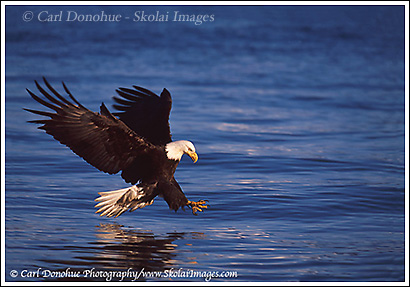
In moving along with my ‘showing some older, pre-blog-photo-era images, I thought I’d post a bald eagle image. This is from the winter of 2002. Continue reading →
Thirdly, I hadn’t been there before. 4th, the natural history of the place is so unique. Icy Bay is a relatively new place, with the recent retreat of 3 glaciers, the Guyot, the Tindall and the Yahtse, there are now 4 fjords, filled with the cool waters of the northern Pacific Ocean.
When the area was first explored by European ships 150-200 years ago, Icy Bay didn’t even exist. John Muir, the great naturalist and founder of the Sierra Club, visited the area a little over 100 years ago, and Icy Bay didn’t exist.
Guess who should be back tomorrow? Here’s a hint: you might get to see something besides birds on here real soon. Of course I’m writing this post 2 weeks in advance, so there’s a chance you might not, too. But by the time this goes online, I should be just about back from 2 weeks in ……?
I ain’t telling.
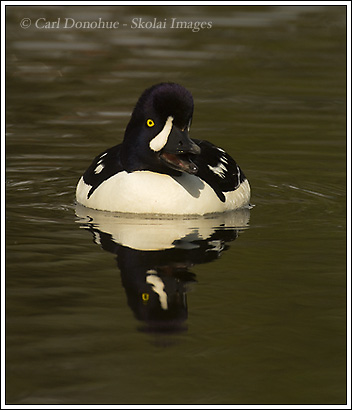
So here’s the male of the Barrow’s Goldeneye again. I liked this image because his bill is wide open and he’s looking at me. I had just moved slightly, where I was more visible to him, and it was as if the bird was saying ‘dude, I so TOTALLY see you’. This was one of the last images I made of this duck. What a cool bird.
Female Barrow’s Goldeneye, Wrangell-St. Elias National Park, Alaska
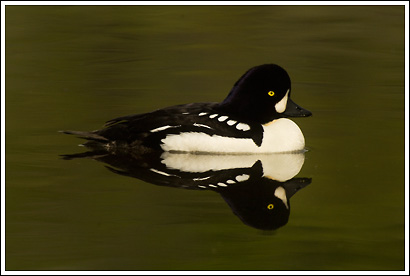
Here’s the female of the 2 Barrow’s Goldeneye ducks I photographed recently. I couldn’t have asked for a more co-operative pair. They were surprisingly tolerant. I didn’t have a blind setup or anything, just slowly and gingerly made my way around the pond, through the woods, hid behind a small bush, and waited for a few hours, and they gradually started coming over my way from time to time, where I could get some images.
It’s wild to see the different between the male and the female of the species. The male of the species, in breeding plumage, is way sharper looking than the drab female. This is pretty common in numerous species, but particularly birds.
Female Barrow’s Goldeneye, Wrangell-St. Elias National Park, Alaska.
Male Barrow’s Goldeneye, Wrangell St. Elias National Park, Alaska
Here’s the best of the duck opportunities I had. The Barrow’s goldeneye.
A male and a female were hanging out at this small pond, and I spent a number of hours there trying to get some images. ducks spend a lot of time floating around on ponds with their head tucked under the wings sleeping. ‘Dabbler’s” they’re called – well these ducks did more sleeping than dabbling.
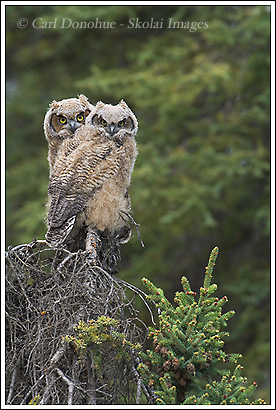
Here are 2 of the 3 Great Horned Owl chicks I got to photograph recently.
I could never manage to find all 3 perched together. I did a a few images of some of them individually. I also never managed to find them in any kind of decent light, so had to shoot at the higher end of the ISO range on my camera – which is a total disaster. The D2x is terrible at higher ISOs (anything over 250, IMO), which makes life miserable late in the day for shooting wildlife – the best time, of course, to find wildlife.
So, these little guys are probably flying around the park now, racing each other through the boreal forest as they swoop, silently, down on the snowshoe hares that are really abundant right now.
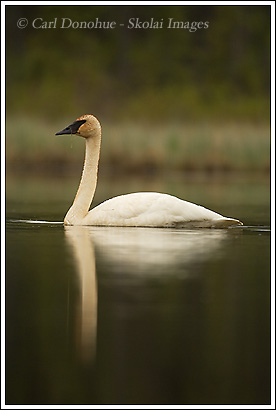
Continuing with the bird theme again, here’s a trumpeter swan I found on my recent travels. The trumpeters were the first birds I saw back in the park as spring began, 2 of them actually swimming on the Kennecott River as it first opened up.
Once the river is ice free, it becomes a silty chocolate brown color, and quite a raging river, the last place a swan might frolic.
But early on, as the first ice melts back, the water is a deep aqua blue, clear and cold, and not as torrential as it becomes in the summertime, once the glacial melt increases. So I was kinda surprised to see trumpeter swans there early on. Then I saw them on the ice, from where I posted a photo or 2 a month back.
Now the ponds are all open and the swans grace their way along the surface (I know, ‘grace’ isn’t a verb, but it sounds nice). They’re definitely an awesome bird.
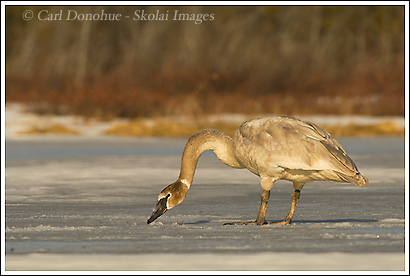
Juvenile trumpeter, Wrangell-St. Elias National Park, Alaska
Here’s one of the young trumpeter swans I shot the other day on the ice in Wrangell-St. Elias National Park.
There were 2 adults and 2 youngsters in tow, last years young, I imagine. As the waters open up the adults will nest and hopefully raise some more cygnets this year.
This yearling was trying to get a drink of water from the meltwater of top of the ice.
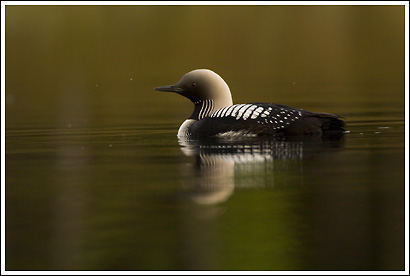
I think of all the birds in the world, the loon has to be the most beautiful. I think the saying should be ‘beautiful as a loon’, not ‘crazy as a loon’. I’ve spent a bit of time watching loons lately, and have yet to seen them do anything crazy. But oh my, their beauty is immeasurable.
Absolutely amazing.
This pair are, according to my bird guide, ‘Arctic loons’, or Gavia arctica, as the Latin name would have it. I thought they were Pacific loons, or Gavia pacifica, but some other photos clearly show the front of the neck to be green more than purple – so I’m gunna call them Arctic loons.
Of course, the same guidebook says the crown and nape are ‘pale gray’ – I saw a blend of creamy tones none of which could be described as ‘gray’, by even the most bland scientific measurement. So much for guidebooks and trying to be objective.
So here’s a ‘thank you’ to my new friends, the Arctic loons, the most beautiful birds in the world.
We have more birds from Wrangell-St. Elias National Park on this page.
It’s been a fun week so far .. the birds are back in the north country. Specifically, Wrangell-St. Elias National Park, Alaska. That means lots of time wondering how I can sneak my way close enough for a photo of one of them.
Ever try to sneak up on a bird?
It’s a tough gig. They have ‘eyes like eagles’ funnily enough, and always know exactly where you are – and how close they let you approach seems to correlate precisely with how well they fit in the frame of your camera – as they get more than half the viewfinder, they fly away – regardless if you’re shooting an enormous bald eagle or a sneaky little robin.
But it’s fun, and it’s so great to have them back in the north.
The woods literally come alive every morning with the various songs and calls of the migratory birds, all getting their groove on and nesting and breeding before summer. I hadn’t realized how much I dig their many sounds until they returned.
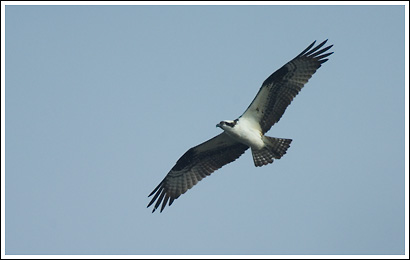
Here’s an osprey photo. I was set up in my blind trying to get some duck photos – with no luck. This osprey appeared and I tried to get some images of him/her. It was ridiculously hard, as I was sitting on the ground, kneeling in fact, with my tripod about 1 foot off the ground.
I had the 500mm and a teleconverter mounted on it, and this osprey appears, flying around looking for something to eat. So I’m literally flopping about on the ground, on my back shooting up at this osprey, swinging my camera and lens around like a militiaman and his gattling gun.
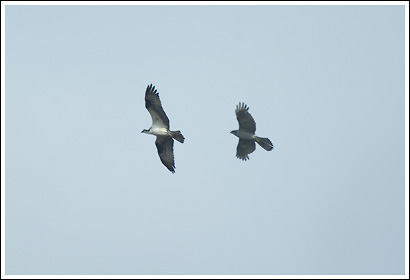
I didn’t get much in the way of sharp images, but it was pretty cool – especially what happened about 10 seconds later.
I was sitting on my blind waiting on some ducks to approach (they never did – ducks are among the sneakiest of all birds) and this osprey started flying overhead.
All of a sudden out of the woods comes this Goshawk on the attack .. it was all over pretty quickly. The osprey, far larger, had it’s butt kicked all too soon, and took off from where it came. The Goshawk disappeared back into the woods once the osprey was gone. They must have a nest I there somewhere, but I never saw it.