Tag Archives: essays

Photographers and icons

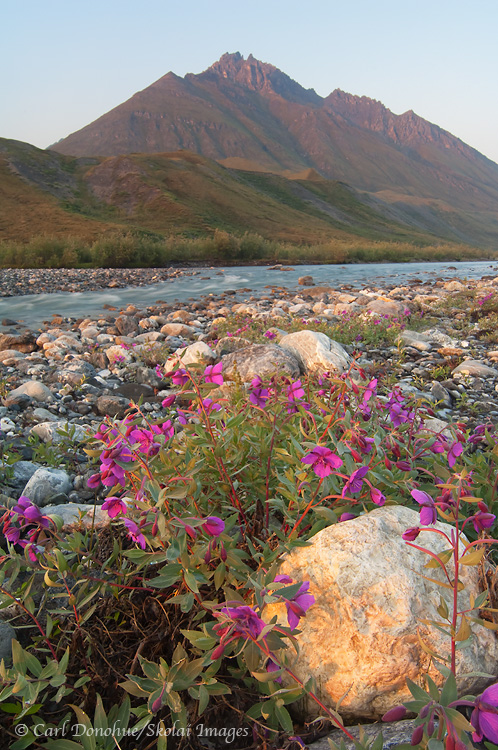
Dwarf Fireweed, Brooks Mountain Range, ANWR, Alaska.
Dwarf fireweed (Epilobium latifolium) and the Upper Marsh Fork River of the Brooks mountain range, in the Arctic National Wildlife Refuge (ANWR), Alaska. Mid summer, this photo was taken about 2:00am. First light of the day. 🙂

Hey Folks,

Recently I’ve read a few articles and posts abwout photography and and photographers, and particularly landscape photographers; the question of ‘shooting icons’ almost invariably comes up. For those readers here who aren’t quite sure what that is a reference to, it simply points to the regularity with which so many famous landscapes are photographed. Scenes such as Grand Teton from the Snake River Overlook, Yellowstone National Park’s Lower Falls are almost ubiquitous with landscape photography.

It’s an interesting discussion. Those kinds of locations are frequently photographed because not only are they spectacular scenes, but they’re also great to photograph; overlooks and viewpoints seemingly designed with the landscape photographer in mind. This is not true of all spectacular scenes, for a variety of reasons.

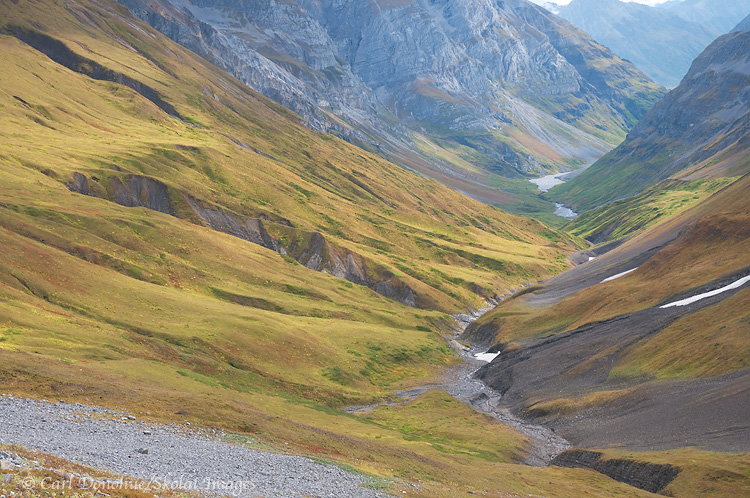
The primary reason a scene like this one, of Mount Edith Cavell and Cavell Lake in Canada’s Jasper National Park has been photographed so many more times than, say, the scene at left, is that Edith Cavell is road accessible. All the other discourse about happiness and contentment and art versus stock and following one’s creative muse and shooting your passion is simply talk; it all comes down to the pavement. If it’s off the road, it’s probably not an icon.

The question then concerns itself with the value of our pursuit; and that, like so many such questions, is entirely contextual. For some people, shooting photos that sell well is all that matters. For others, shooting photos that express some personal vision is more important.

Continue reading
Are Grizzly Bears Really Man-Eaters? Debunking the Shoot-on-Sight Narrative

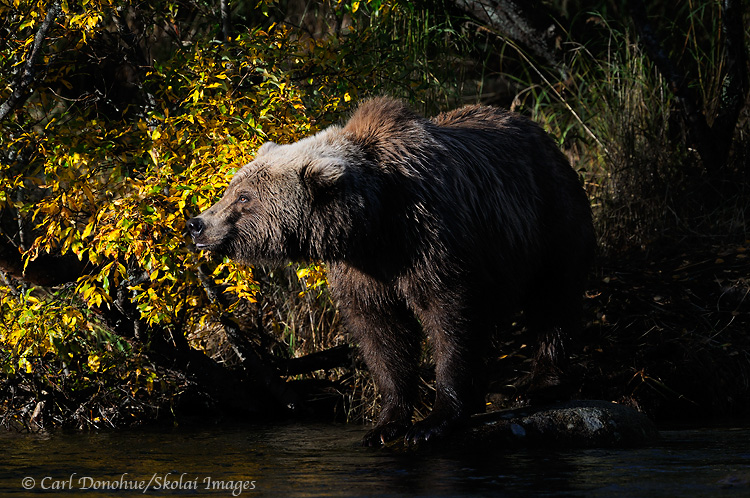
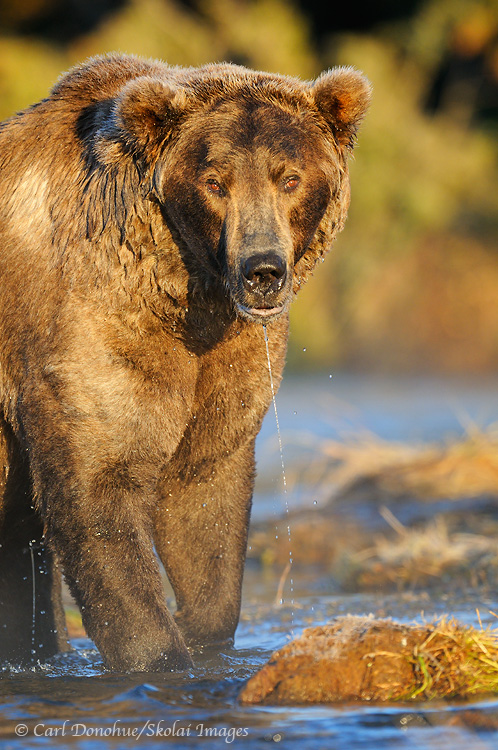
Male brown bear, Katmai National Park, Alaska.
A large male (boar) brown bear walking up a salmon stream in early morning light, fall. (Grizzly bear, Ursus arctos). Katmai National Park and Preserve, Alaska.

Hey Folks,

Just to post something for while I’m out of town – a brown bear photo from the grizzlies in the Fall photo tour.

Edit: Well, I had initially posted this ahead of schedule, planning on being out of town this week. However, 7″ of snow and more on the way put paid to my motivation to drive through the Chugach Mountains to Wrangell-St. Elias National Park, so I’m still in town. Maybe next week I’ll get gone.

On to things that matter.

The inspiration behind this post is this rather unfortunate piece. An excerpt:

Conservative preacher Bryan Fischer of the American Family Association writes “One human being is worth more than an infinite number of grizzly bears. Another way to put it is that there is no number of live grizzlies worth one dead human being.”

I wonder if he feels the same way about, say, cigarettes, or motor vehicles. Even something as commonplace as fast food diets are responsible for far more human ill health than any grizzly bear (or grizzly bear population) ever has been. When he cries for their riddance, he’ll have some integrity.

He goes on (and on); “If it’s a choice between grizzlies and humans, the grizzlies have to go. And it’s time.”

More ignorance. It’s already BEEN time, Mr Fischer. Grizzly bears were virtually wiped out, via human hands, from the vast majority of their former range years ago. Lots of years ago.

Continue reading

Backpacking trip; Hidden Creek Adventures to Oz

A Trip Report

Hidden Creek valley, in the Wrangell mountains. A popular backpacking route, Hidden Creek in the Wrangell Mountains is a wonderful hike. Wrangell-St. Elias National Park and Preserve, Alaska.
Hidden Creek valley, in the Wrangell mountains. A popular backpacking route, Hidden Creek in the Wrangell Mountains over to the Lakina River is a wonderful hike. Wrangell-St. Elias National Park and Preserve, Alaska.

Hey Folks,

I’ve headed out again for the next trip, but will schedule this post in advance. This is from close to the pass above Hidden Creek, looking back down the valley we’d just hiked. We walked up the south side of the valley (right side in the frame), then crossed and climbed up to a bench on the north side of the pass. Camping up there was simply awesome. 2 bands of Dall sheep were wandering the mountains above us, and we saw mountain goats higher still.

Hidden Creek is simply stunning. This particular afternoon, we crested the pass and camped on the other side of the saddle, which is where the previous post’s photo (“Reflections”) was taken. Suffice it to say that the back half of the trek is just as rocking as the front half.

Continue reading

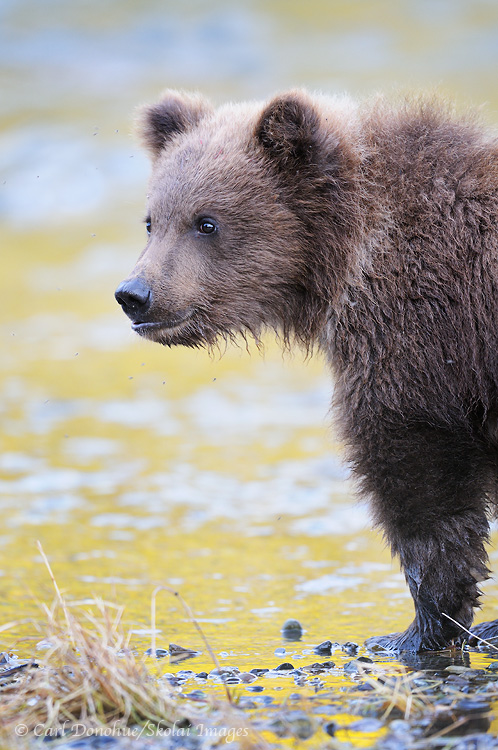
Brown bear cub photo

A young brown bear (Grizzly bear, Ursus arctos) cub. Brown bear cubs will stay with their mother for 2-3 years before venturing out alone. Brown bear cub, Katmai National Park and Preserve, Alaska.
Brown bear cub photo. A young brown bear (Grizzly bear, Ursus arctos) cub. Brown bear cubs will stay with their mother for 2-3 years before venturing out alone. Brown bear cub, Katmai National Park and Preserve, Alaska.

Hey Folks,

Here’s a young spring bear cub photo from the recent photo trip I led to Katmai National Park and Preserve. This youngster had 3 siblings, and it was a real treat to get to see them play and tumble together.

Catching a photo of one by himself, without the others in the frame, was more difficult than one might guess it would be. There were almost always other bears in the frame.

Last year, for some reason, there were not too many spring cubs in the area at all, but this year the area was home to quite a few. They’re such a blast to photograph, and oh-so charismatic. Each has his/her own character, and some of them are unbelievably plucky little critters. We watched one take quite a dunking from his mother, after he tried to steal a salmon from her. She grabbed him in her mouth, shook him back and forth like a rag doll, and literally buried him in the river. I thought ‘well, that’ll teach the little guy a lesson’ – Hardly! He came up growling louder than before, grabbed the fish in his mouth, and took off with it before his mother could even snap at him. They’re just way too cute!

These little baby bears are born in the dark of winter, tiny and defenseless. Their mothers-to-be enter a den in late fall, usually anywhere from late October through November. Brown bears almost always enter their den during a snow storm, or immediately before a snow storm. The theory most folks ascribe to is the snow storm will cover both the entrance and the tracks leading to the den, hiding both the bear and the den’s location.

Late January or early February, though sometimes as late as March, the cubs are born, blind and virtually helpless.

Continue reading

Grizzly Bear and Fall Colors

Grizzly bear and fall color, standing in warm afternoon light on the edge of a salmon stream. Ursus arctos, brown bear, Katmai National Park and Preserve, Alaska.

Hey Folks,

As I mentioned in a post a few days back, I am pretty excited about some of the grizzly bear photos I took on this most recent trip to Katmai National Park. Over the years I’ve spent so many weeks there, shooting and re-shooting photos of grizzly bears, that it can be difficult to really bring home some new images. This photo is one I was super happy with.

I took, of course, countless images of bears eating salmon, chasing salmon, catching salmon, standing around, sitting down, sleeping, fighting, playing, etc. But what I really wanted to capture was some dramatic images in dynamic weather or dynamic lighting situations.

Continue reading

Extreme Environmentalists, the Gulf Oil Disaster and ANWR

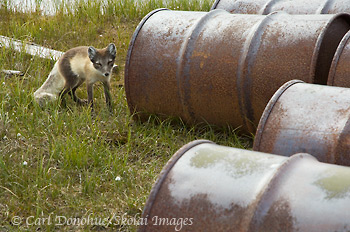
Arctic fox and oil barrels on the coastal plain, Arctic National Wildlife Refuge, Alaska.
Arctic fox and oil barrels on the coastal plain, Arctic National Wildlife Refuge, Alaska. Please click on the image to view a larger version of the photo.

Hey Folks,

Excuse my rant; but, this is my blog, and I’m about to wander in the mtns for a while. Before I go, I need to speak out.

I read earlier today of ex-Alaska Governor Sarah Palin’s latest comments about the current disaster in the Gulf of Mexico. She states “Radical environmentalists: you are damaging the planet with your efforts to lock up safer drilling areas”.

Her basic premise is that the Deepwater Horizon catastrophe is the work and responsibility of “extreme environmentalists”. Let’s disregard, for now, the fact that she’s been a proponent of offshore drilling for years now (including her 2008 run for VP where she repeatedly claimed that Drill Baby, Drill “also means safely tapping into our offshore sources, safely, environmentally safe”. In her own words, whilst debating then-Senator Joe Biden she stammered “You even called drilling — safe, environmentally-friendly drilling offshore — as raping the outer continental shelf. There — with new technology, with tiny footprints even on land, it is safe to drill and we need to do more of that.

“friendly”? If it weren’t so sad it would be farcical; what the hell is “friendly” about extracting crude oil from beneath the ocean? Makes me wonder what kind of “friends” some of these people keep.  If one of my friends came over to the house and started drilling a hole 20 000′ into the lawn I’d say they’re outta their mind.

I’ve no problem with a discussion of the collective responsibility owned by our society. I hopefully made that clear in my earlier post here. But I won’t absolve the oil industry of their responsibility, nor the clowns who would reduce a discussion of the energy policy of the world’s largest energy consumer to a 3-word bumper-sticker slogan: “Drill Here, Drill Now”  of theirs, which is the intent of Palin’s outburst. Sarah Palin’s remarks, along with this childish assessment from Ted Nugent is not an honest critique of any social construct at all. In fact, it’s nothing more than the opposite of that; an attempt to divert attention from the direct and very palpable targets of hella-oil, political corruption and bumper-sticker political campaigns to a somewhat more nebulous, transparent target. That is intolerable.

Continue reading

A Tragedy in the Gulf of Mexico

Hiker playing Native American Indian flute on the arctic coastal plain, Arctic National Wildlife Refuge (ANWR), Alaska.
Playing a Native American Indian flute on the arctic coastal plain, Arctic National Wildlife Refuge (ANWR), Alaska. Please click on the image to view a larger version of the photo.

Hey Folks,

I’ve been wanting to write for the last week about the current Gulf Oil disaster, but haven’t really been quite sure what to say. There are simply so many tangents to this mess that I’ve not known where to start. The deaths of 11 people seem, unfortunately, to fade into the melĂ©e of concern about big oil, political ineptness, poisoned ecosystems, fathomless litigations, ad infinitum. The web we weave seems larger than the spread of oil.

It makes sense, to me, to start at home. The reality is that this catastrophe stares us right in the eyeball. The mirror reflects our own lives – I drive a car, I love my gore-tex and silnylon tents, my synthetic-fill jacket, my polycarbonate cameras. I eat fresh bananas and whole grain breads shipped here from afar. My computer was flown directly from Shanghai, China. The world I live in is a fossil fuel world. That world includes crude oil belching from the ocean floor into the Gulf of Mexico, and on to Gaia knows where.

So I bear responsibility in this mess; I want cheap gasoline, cheap oil. I complained about the soaring gasoline prices just 2 years ago. I failed to demand that the federal government not exempt BP from an environmental impact study. I failed to demand that Minerals Management Services mandate a remote-control shut-off switch on all drilling operations. I failed to demand that the oil industry follow the strictest, safest procedures possible.

Continue reading

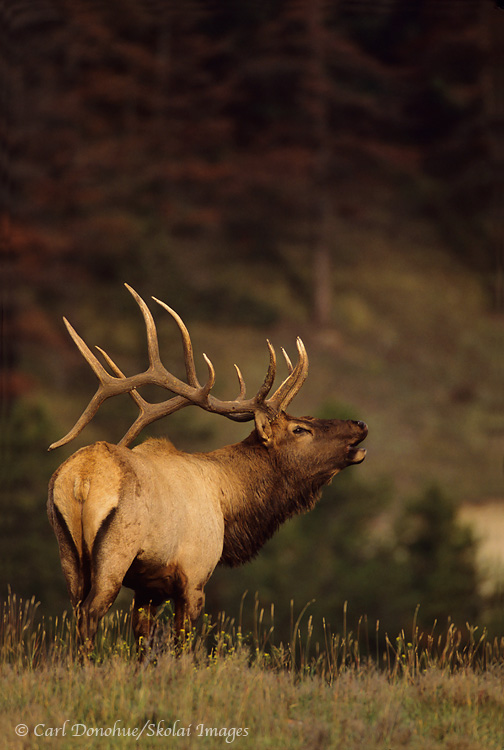
Free Photos – Bull Elk Photo

Why Your Photography Business is Not a Non-Profit

Bull Elk bugling, Jasper National Park, Canada.

I had another photo request for free use of my images today; they come in pretty regularly, it seems, particularly for wildlife and landscape photography. We nature lovers obviously love what we do, and so must have a desire to give our work away for free. How can we not?

I’ll be the first to admit it folks; these are tough times, for buyers and sellers alike.

There’s no denying that truth. I thought I’d try to find some kind of compromise here. I always like to develop a relationship with someone who may potentially pay for my work, and I also wanted to help these people out – theirs is a just and worthwhile cause. And hey, maybe helping these folks out might provide the impetus for some real economic activity in the world?

I hoped to do my bit to help the economy get rolling, my own little stimulus plan, if you will (I still can’t believe the government got away with labeling theirs a ‘stimulus package‘). At the same time, I didn’t really want to give away my work for free. What to do?

The ‘stimulus plan’ for free photo requests

I tried to explain to the person on the phone; I listened closely, and sympathized – “yes, I realize you’re a non-profit organization, but  my business, on the other hand, is NOT a non-profit“. This didn’t clarify things, apparently.

A different tact:  “Well, you see, my rent doesn’t go down according to the charity work that your business does, and the food I eat doesn’t become free simply because I did a good deed for the day“. We got nowhere.

Continue reading

The art of nature

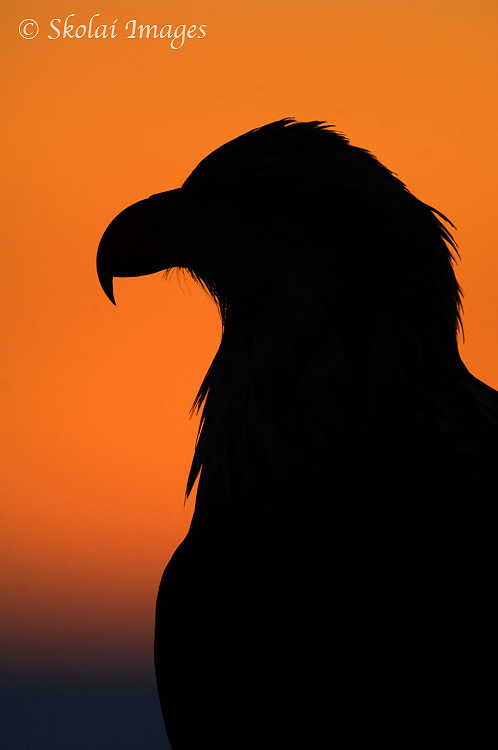
Silhouette of a bald eagle, Kachemak Bay, Homer, Alaska.
A bald eagle headshot, silhouetted against a glowing sunset, Kachemak Bay, Homer, Alaska.

Hey Folks,

I read a great blog on art yesterday, by Paul Grecian. The subject was a play on the aural equivalent of the old adage, ‘if a tree falls in a forest and no one hears it does it make a sound’. Paul takes the viewpoint that art is a human pursuit, and exists only when it has a human audience. “If there is no human to perceive it and translate the experience into an emotion, then there is no art” – I’m not so sure I subscribe to that idea, for a number of reasons.

I think art is a verb; art is something we do. The results of that process might be nice to look at, or not, or nice to listen to, but the essence of art is creating. The act of creating is where art lies, not the products of that process. And we are not at all the sole creators. An American Tree Sparrow calling the tune of the alpine country is as artful as Joshua Bell playing a Beethoven concerto. The dance of the Japanese Red Crowned Crane is glorious. A Bower bird’s building her nest? The song of the wolf pack over the frozen night air is as spell-binding as Aretha or Stevie on a good day, no? What distinguishes human art from the performances of our fellow creatures, other than our own ability (and endeavours) to relate to it?

Art is essentially play.

Continue reading

Manufactured Landscapes – a film review.

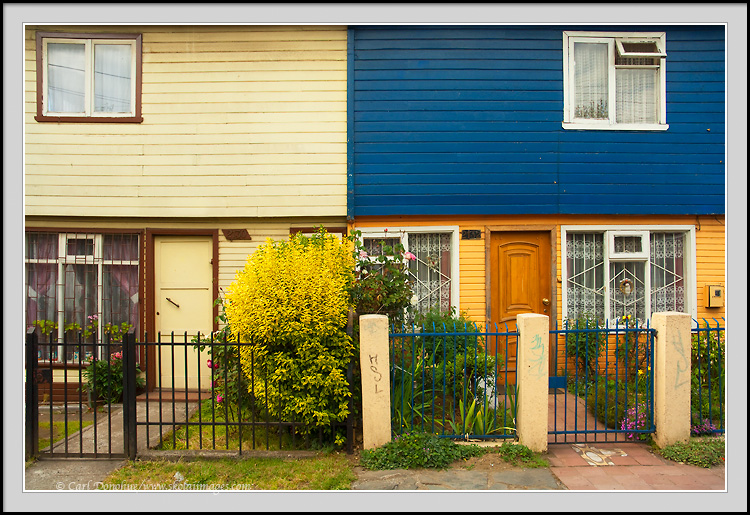
Colorful duplex and garden, Orsono, Chile.

Colorful duplex and garden, Orsono, Chile. Please click the image to view a larger version of the photo.

Hey Folks,

I’m depressed. I just watched “Manufactured Landscapes”, (2006) and if you haven’t seen it, I recommend you do. It’s a pretty intense documentary, featuring amazing photography by Edward Burtynsky. Burtynsky creates some powerful imagery of some of the most unlikely subjects – largely industrial wasteland. Coal mines, dams, factories (the opening shot shows the inside of a factory over three quarters of a kilometer long), parking lots, construction sites, destruction sites, you name it. It’s compelling stuff – the beauty in his photos is moving, yet discomforting. The reality he brings to the viewer is a bit overwhelming; this stuff IS our world, today.

The film is set in China, largely, though the narration points out that this industrial development is global; almost all of the products being pieced together in factories throughout China consist of raw materials shipped in from around the globe, then shipped back off to meet demand overseas. The stark reality here is that China’s environmental problem is our problem; insatiable demand from the “developed” world is altering not just the landscape, but the land itself. Continue reading