Category Archives: Wildlife

Wildlife Photos. Notes and thoughts related to wildlife photography.

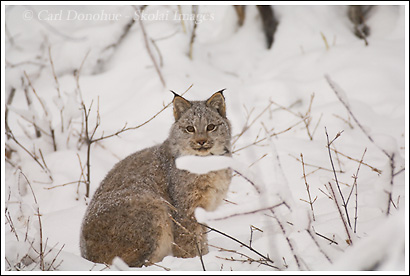
Wild Lynx, Wrangell-St. Elias National Park, Alaska

Wild lynx, Wrangell St. Elias National Park, Alaska.

hey Folks,

I promised my buddy Ron I’d post this. Hey Ron! 🙂

This is a wild lynx, from Wrangell St. Elias, photographed this last winter. I was pretty lucky to get this. I couldn’t believe my luck when I spotted this gorgeous cat, and hoped and prayed I’d get a photo.

The lynx obliged me. I wish, of course, the image wasn’t quite so cluttered, particularly his little white beard created by the snow-covered branch in the foreground, but it’s the first photo I ever got of a lynx, so I’m happy enough, I reckon. He let me fire a few a frames, and then bounded off into the brush.

Cheers

Carl

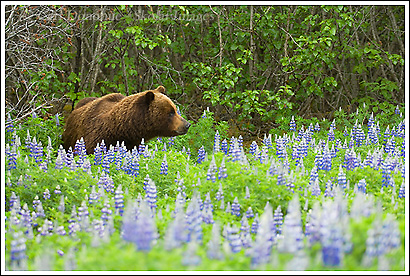
Grizzly bear, Icy Bay Wrangell-St. Elias National Park

Grizzly bear in a field of lupine, Icy Bay, Wrangell-St. Elias National Park, Alaska.

Hey Folks,

Part 3 of the disaster at Icy bay.

So I get back to camp, and the bear’s still trashing my gear over in the woods nearby. I don’t know the full extent of the damage to my gear yet, and I don’t know what he’s planning on doing next. I don’t know what he did with one of my (hopefully) bear resistant cannisters of food, my stove and cookware.

Fortunately, I carry a satellite phone with me on trips in to the backcountry now, and I decide it’s a good move to call the pilot who flew me to Icy Bay and ask him to come get me. It’s a tough decision to make, because it’s such a pricey trip to make and have to cut short, but I didn’t have a backpack with me, so I couldn’t really feasibly move my camp gear too far, and the bear has made it clear he’s not leaving, and that he’s unafraid of me.

I figured he was moving along the beach when he found my boat and trashed it, and is most likely to continue with that once he’s done with the gear. Which likely means he’ll be heading my way before too much longer.

I called the pilot, explained the situation to him, and he said he’d come get me if I wanted. I wanted. He asked how soon, and I said ‘well, now’s a good time if you’re available’.

He was, so said he’d see me in an hour or so.

I packed up all the gear in my tent, and was just putting my camera gear together in a pelicase when movement once again caught my eye. The bear was coming along the beach, on the edge of the woods as I thought he might be) and was about 40 yards from me, 20 yards from my tent.

I’ve written on my guiding website how much I like my Mountain Hardwear Skyledge 2, and I really wasn’t in the mood to lose more gear, especially my beloved tent. At the same time, I wasn’t sure what I could do about it.

I called to the bear, once more “Hey Bear” and he agreed to detour around the tent. By about 5 yards. He walked by it, thru a little stand of alder, and into a little field of lupine, where he took a few bites of the grass growing there. How could a photographer skip a chance shot like this?

So I snapped off a frame, and asked him to leave – that’s the photo above. Instead, he started to approach:

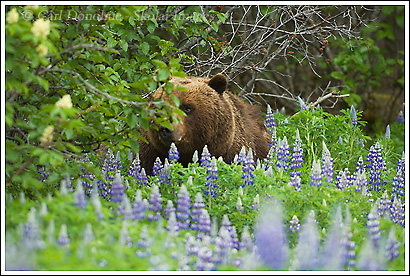
grizzly bear, approaching, wrangell st. elias np, Alaska.

Which was kind of a bummer.

I didn’t want him too close. And I decided he was too close.

I backed up a little, and he kept coming closer.

For the photographers out there, these images were taken at 200mm focal length (the first one at 100mm). That’s pretty close. He stopped and looked at me. I was already stopped and looking at him.

We talked a minute, but couldn’t come to an agreement.

I thought he should go away, and he thought he should not go away: an impasse with 500 plus pounds of grizzly bear. I told him I was going away, shortly, if he didn’t mind waiting.

He said he didn’t want to wait.

I stepped back, and he stepped forward. I stopped, and he stopped, his nose just twitching. I was twitching too, but it wasn’t my nose.

At this point, I was a little uncertain what might be a good option for me. I knew the plane was still at least 30 minutes away, and wondered if the bear and I could sit and stare at each other for 30 minutes ….. hhhmmmmm?

All the while I kept talking with him.

Finally, I decided I’d try something I never thought I’d do. Throw a rock at a grizzly bear. He clearly wasn’t leaving otherwise. So I slowly bent, picked up a hefty rock, and told him if he didn’t leave, I’d throw a rock at him. He didn’t leave. Bummer. I plucked up some gumption from somewhere and tossed the rock into the brush in front of him.

The bear turned and raced away immediately. I told him not to come back again, or I’d do it again.

Actually, one thing that was interesting to me was that he didn’t actually run ‘away’. He ran straight back over to his new kayak and dry top. I could hear him in the woods as I packed the rest of my duffel, and moved all my campsite gear down the beach to where the floatplane would arrive. Hopefully real, real soon.

It seemed like about 6 weeks later when I heard the drone of the engine, but I checked my watched and it was only 15 minutes or so.

The pilot was hauling a**. He flew low over the area a few times, buzzing it loudly, and this seemed to run the bear off – I couldn’t hear him any more. The plane landed, and we loaded my gear into it, and then the 2 of us walked into the alder where the boat was.

No bear. Cool.

I threw all the trash into a duffel, and hauled it to the plane, and the 2 of us hauled the boat out as well. I searched high and low for my second canister and couldn’t find it in the woods – I began to wonder if he’d eaten it. 🙂

Seriously, I knew he couldn’t eat it, and a gnawing thought in the back of my head told me exactly where it was. Sure enough, a walk to the edge of the brush and a look out over the bay told the story – there’s this little black thing bobbing in the ocean a 100 yards off the shore.

We packed the rest of the gear, and then floated the plane around to that area, and by now the canister was on shore. It may be ‘bear resistant’ but it’s not ‘bear proof’. The lid has a hole in it where a really big sharp pointy canine tooth punctured it, and the canister had half-filled with water – salty dinner for me!

I was glad to find the canister, but kinda bummed that the bear threw it in the ocean.

Who knew bears were so vindictive?

Next up, fly back to Yakutat and check out the damage.

Cheers

Carl
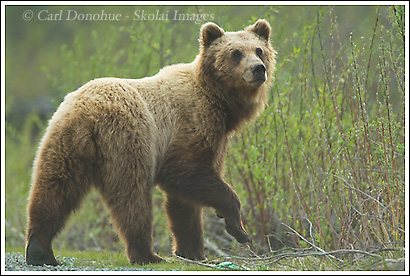
Grizzly bear, Wrangell St. Elias National Park, Alaska

Grizzly bear, Wrangell St. Elias National Park, Alaska

Hey Folks,

I’m out in the field again, so I’ll pre-post a few more images from my last trip here, scheduled for every other day or so while I’m away. I’ll be gone 2 weeks, so we’ll see how it goes.

Beth asked ‘did I get close enough for any images with the bears’ in a recent thread. Well, this particular evening, I was shooting Lesser Scaups (ducks) on a small pond in Wrangell-St. Elias National Park, and had been waiting for about an hour for the ducks to come close enough.

They’re pretty savvy, for relatively small creatures. They know how far they have to remain from me to avoid getting their pictures taken, depending on what lens I have on my camera.

So, after a while, I look in my rear vision mirror, and here’s a grizzly, about 30′ behind my truck. I like ducks and all, but I’ll take a grizzly photo over a duck, any day. Particularly when the ducks are too far for a decent photo.

So I hopped out of the truck to get a better angle, and took a couple of images before this young fella wandered into the brush nearby.

Grizzly bear, Wrangell-St. Elias National Park, Alaska.

Cheers

Carl

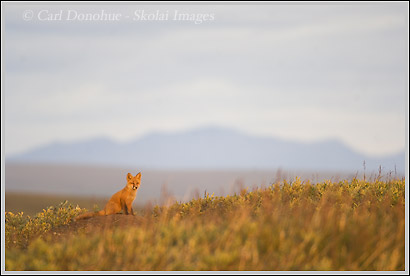
Red fox kit, Arctic National Wildlife Refuge, alaska

red fox kit on the coastal plain, arctic national wildlife refuge, alaska.

Hey Folks,

I just saw this article on CNN’s website. From the first paragraph, ‘President Bush said Saturday that the Saudis’ modest increase in oil production “doesn’t solve our problem,” ‘ – The whole tone of the article is an acknowledgement that such a relatively small increase in oil supply, for the US, is meaningless. This increase could bring gas online to the American market almost immediately. At the same time, the current US administration is arguing for the opening of the Arctic National Wildlife Refuge (ANWR) to oil and gas extraction. The US Govt’s own studies yield a mean peak in oil supply from the Refuge of under 900 000 barrels a day. That peak would arrive about 10-12 years AFTER the oil supply came online – and the oil is expected to take 10-15 years to come online after any legislation allowing drilling their might be passed. In other words, it is expected, under optimal conditions, to be 25 years before that peak in supply is reached. So if the Govt decides next year to open the Refuge to drilling (fortunately the US Senate just voted it down, again, for this year), we could hope for fewer than 900 000 barrels a day to come forth in the year 2033.

The second point about this is that one of the lines being touted most strongly for drilling in the Wildlife Refuge (ANWR): Continue reading

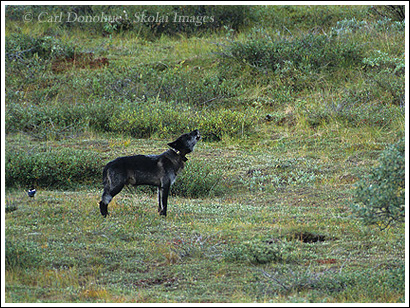
Wild Wolf photo, Denali National Park, Alaska

Wild black wolf, alpha male, howling, Denali National Park, Alaska.

Hey Folks,

Well, it seems those pesky wolves are in the news up here yet again.

This time it’s not the F&WS and their infinite wisdom declaring a population to be ‘experimental’, or a bunch of anti-wolf people shooting wolves from airplanes.

This time, the news is about the National Park Service tracking down a wolf in Denali National Park, anesthetizing the animal, and removing a snare from its neck. You can read more about the story (the pictures are pretty gross, don’t visit these links if you might be upset by some nasty wounds on a wolf) here and the update here.

Basically, 2 wolves had been trapped this past winter, and escaped, but with the snares on their necks. The snares dug in deep, and caused some ugly wounds. The park service, getting ready for the opening of the park and influx on countless visitors, has no interest in having a bunch of tourists see wolves in this condition, so they’ve been hunting high and low for these 2 wolves, to try to remove the snares. Continue reading

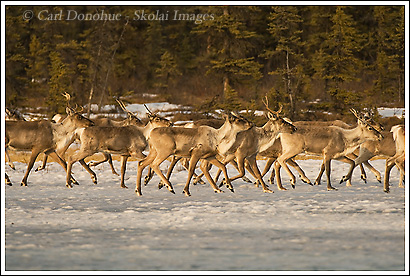
Caribou Herd, Wrangell St. Elias National Park, Alaska

caribou herd crossing frozen lake, wrangell st. elias national park, alaska.

Hey Folks,

Here’s a photo of part of a small herd of caribou I ran across in Wrangell-St. Elias National Park a few days ago. I visited the north side of the park briefly, before having to head to Anchorage for a week. The north side of the park is so different to the middle and southern side I’ve spent most of the winter on so far (I say ‘winter so far’ because we’re currently in the middle of a predicted 2′ dumping of snow – which, in my book, means winter isn’t over).

My trip up to the northside, coming to the park from Nabesna Rd, has me all fired up already to spend some more time there both this summer and the fall and winter .. I think wildlife are more prevalent on the northside – I saw moose and caribou on one afternoon .. lots of caribou, probably over 300 in a few hours, scattered along the way in bands of between 20 and 50.

They’re super skittish though, and difficult to photograph.

I spent the better part of an afternoon trying to get close enough for some decent photos, with little luck. This band I found out on a still ice-covered lake, and with a little patience (on my part) and a lot of luck (on my part) and much tolerance (on their part) I managed a few photos. The light was awesome. Continue reading

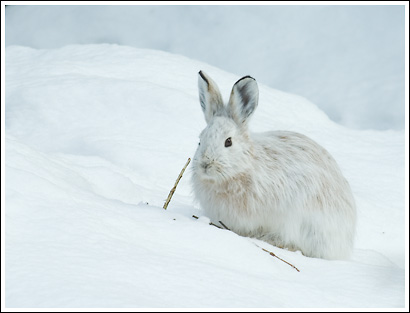
Snowshoe Hare, in winter, Wrangell St. Elias, Alaska

snowshoe hare in white winter coat, on snow eating a willow stem, wrangell st. Elias National Park, Alaska.

Hey Folks,

Here’s one I shot yesterday. As winter comes to an end, the hares are hungrier than ever, which means I get to see them a little more. This one is just starting to change his coat back to the brown summer coat. You can see the black tips on the ears, which don’t go white, even in the mid of winter. As winter goes along, the hares get hungrier and hungrier – there is not a lot of fodder for them once the snow covers everything. You can see the willow branch this one was nibbling on when I found him. The hares eat the bark right off the saplings .. Continue reading

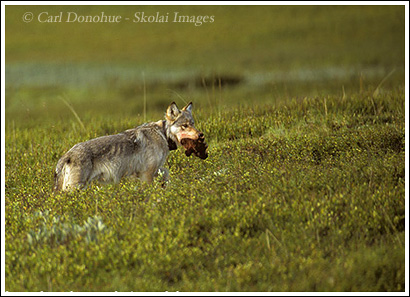
Wild Wolf photo, Denali National Park, Alaska

A female wolf, alpha female of the Grant Creek Pack, in Denali national Park, stands with the head of a small caribou she hunted and killed earlier that day.

Hey Folks,

Recently some of the environmental news has be regarding the delisting of the Gray Wolves in the Greater Yellowstone Ecosystem. Hence you can see, I post a picture of a wolf from Denali National Park.

As you can see from the image, the wolf was collared by the Park Service biologists, to track and record her movements and to help them learn more about wolves. She’s dead now, apparently killed by wolves in another pack last winter, wandering onto some turf that didn’t belong to her. Such seems to be the way with wolves. Continue reading

The Arctic National Wildlife Refuge

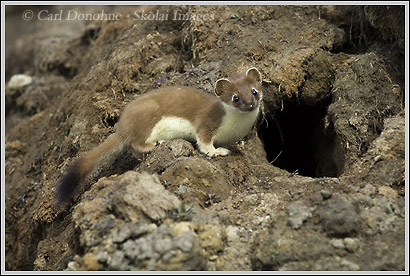
Weasel, ANWR, Arctic National Wildlife Refuge, Alaska

Hey Folks,

Here’s a follow up to my recent post on proposals to drill for oil in the Arctic National Wildlife Refuge, Alaska. Whilst that post concentrated on facts and figures and data and so forth, I think greater arguments ought be made. As you can see from a cursory read of that post, it’s too easy for folks to cut up a pie in any way they choose in order that it might yield the slices that best fit their appetite. I suppose part of the reason for this is that the pie itself is, ultimately, generated by our cultural institutions, our way of living, our way of seeing the world.

The potential number of barrels of oil the Arctic National Wildlife Refuge may yield is somewhat of an abstraction – what constitutes a “barrel”, for example? How large is the footprint of a drilling rig? How many caribou will that impact?

Any measurements we choose to use are simply yardsticks of our own worldview (I guarantee you, for example, that the Porcupine Caribou Herd would, if asked, probably give a very different answer to even our cleverest scientists). What if we don’t look upon the world with that viewpoint, however? How else might we be able to see the world, and in what ways might we possibly benefit from a different angle? Continue reading

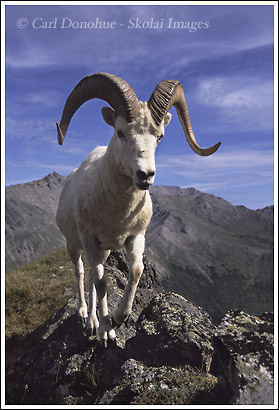
Dall Sheep Ram photo, Denali National Park, Alaska

A Dall sheep ram photo, taken late summer, Denali National Park, Alaska.

Hey Folks,

Well, I was going to post another little note about ANWR, but I haven’t finished it yet and I want to go to bed. So I looked through my folder of images for the blog, and had a cool kayaking photo all picked out when I saw this one and chose it instead. This photo was taken in Denali National Park.

I spent the whole day up on this ridge with a band of Dall sheep rams, it was awesome. They’re pretty used to people approaching them up there, so they let me get reasonably close. Mid-morning they all lay down in the shade and took a nap, so I did the same. A couple of hours later, one woke up, rose and walked around the area a little.

I tried to get in position for some shots, and he ended up on this little outcrop here. I was lying on the ground, and before ya know it, he walked right up to me. I lay as still as I could and he ended up nearly stepping right over me. It was pretty cool.

I’d love to get some images of rams like these over in the Wrangells, where the sheep tend to be bigger, but because they get hunted quite a bit, they’re WAY more skittish. Also, because Denali is so much more heavily visited, the sheep are very used to people. In Wrangell-St. Elias NP, even where the sheep are not hunted, they so rarely encounter people, especially the rams who stay up very high, that they’re pretty wary.

Maybe this summer I’ll have some more luck with them. Until then, Denali is the place for rams.

Happy Easter!

Cheers

Carl